What if you’re launching a steel pedestrian bridge in Dhaka—but don’t have drawings, load calculations, or even a finalized site survey? That’s exactly where we step in—not with a quote, but with a field-tested, Bangladesh-ready bridge solution, built from 15 years of delivering similar structures across South and Southeast Asia.
Real concerns—no assumptions
We’ve heard the same questions from clients like you: Will corrosion eat through the structure within 3 years in Dhaka’s 80%+ humidity and monsoon rains? Can the bridge safely span between active railway tracks while resisting vibration from passing trains? Does it meet RAJUK’s clearance rules, Bangladesh Railway’s live-load requirements (BDS 1300-2:2019), and the National Disability Policy 2022’s tactile/gradient mandates? And critically—can it be assembled without disrupting station operations?
Factory-level inspection—before steel leaves our yard
Every bridge component undergoes three independent checks: dimensional verification (CMM + laser tracker), coating thickness measurement (DFT ≥ 120 µm after thermal zinc + PU topcoat), and weld integrity testing (100% ultrasonic for critical joints, per EN ISO 17640). We share full test reports—not summaries—with every shipment. For Dhaka projects, we add a fourth check: accelerated salt-spray testing (ASTM B117, 1,500 hrs) on sample assemblies to validate corrosion resistance under tropical coastal conditions.
Technical responses—grounded in local reality
- Structural system: Hybrid truss-girder design—lighter than solid plate girders, stiffer than simple beams—optimized for 0.16g seismic zone (BDS 2015 Part 2) and dynamic rail-induced vibration (damping ratio ≥ 3.2% measured in lab).
- Materials: Q355B steel (EN 10025-2), hot-dip galvanized to ISO 1461 (minimum 610 g/m²), finished with UV-resistant polyurethane topcoat (RAL 7035, gloss 70 ± 5). All fasteners are A4-80 stainless steel.
- Accessibility & safety: Ramp slopes strictly ≤ 1:12; anti-slip grooved stainless-steel treads (coefficient of friction ≥ 0.7 dry / ≥ 0.5 wet); integrated tactile paving strips compliant with IEC 61938-2022.
- Site integration: Pre-aligned bearing pads with ±2 mm tolerance; modular bolted connections allow ±15 mm field adjustment—critical when interfacing with existing station foundations that may have settled unevenly.
Supply chain transparency—no black boxes
We publish real-time production milestones via a shared portal: raw material mill certs uploaded within 24 hours of receipt; weekly fabrication progress photos with timestamps; third-party SGS pre-shipment inspection reports issued before loading. For Dhaka deliveries, we use only bonded logistics partners with customs clearance experience at Chittagong Port—and include mandatory fumigation certification (ISPM 15) and BDS-compliant bilingual documentation (English + Bengali) in every container.
No surprises in quality—only managed exceptions
If a weld fails UT, we log it in our internal Non-Conformance Register within 1 hour, root-cause it by shift end, and rework or scrap—never “reclassify.” Over the past 3 years, our average exception rate is 0.23%, and 98.7% of all non-conformances were resolved internally—zero client-facing delays. Every deviation is traceable to operator, machine, and batch number.
Thinking beyond handover—your bridge’s full lifecycle
We recommend ordering in two phases: Phase 1 (foundation anchors + main trusses) shipped 12 weeks ahead for early civil works coordination; Phase 2 (deck panels, railings, finishes) shipped 4 weeks before installation. This de-risks port congestion and avoids on-site storage of sensitive coated components. We also provide a 10-year maintenance schedule—including recoating intervals, bolt torque checks, and drainage cleaning—aligned with Dhaka’s monsoon cycle.
Local support—not just remote troubleshooting
We partner with three certified engineering firms in Dhaka (all registered with the Institute of Engineers, Bangladesh) who handle on-site supervision, RAJUK submission support, and as-built documentation. If an issue arises during installation, our regional technical lead—based in Chittagong—arrives onsite within 48 hours. Post-commissioning, we conduct annual remote structural health reviews using your provided settlement and vibration data.
How we serve you—end to end
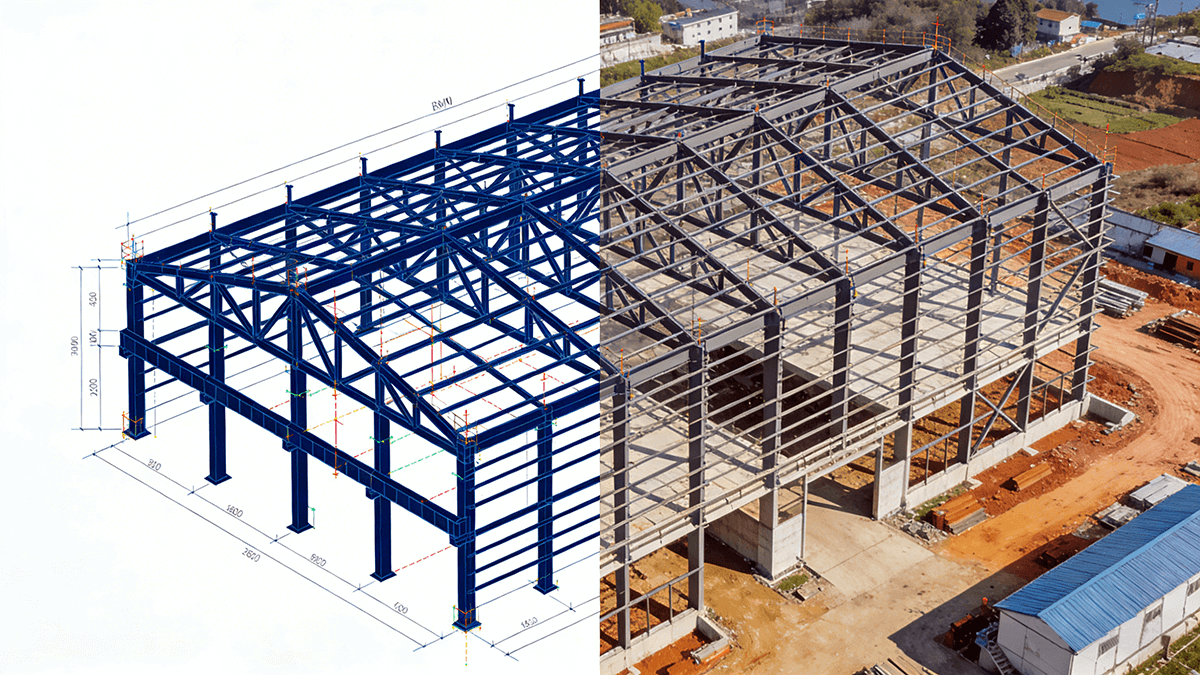
We don’t sell steel—we deliver certified, site-adapted infrastructure. From BIM-coordinated clash detection (using Revit + Navisworks), to fabrication under ISO 3834-2 certified welding procedures, to CE-marked components tested per EN 1090-2 EXC3, to full EPC handover with O&M manuals in Bengali—we own the process. No subcontracted design. No off-spec materials. No untraceable coatings.
Next step—let’s build your bridge right, from day one
Share your site coordinates and any available civil drawings—even sketches or drone footage—and we’ll send back, within 5 working days: a free conceptual layout, a Dhaka-specific corrosion & seismic risk assessment, and a clear list of what we’d need next to lock scope and timeline. No sales pitch. Just engineering clarity.