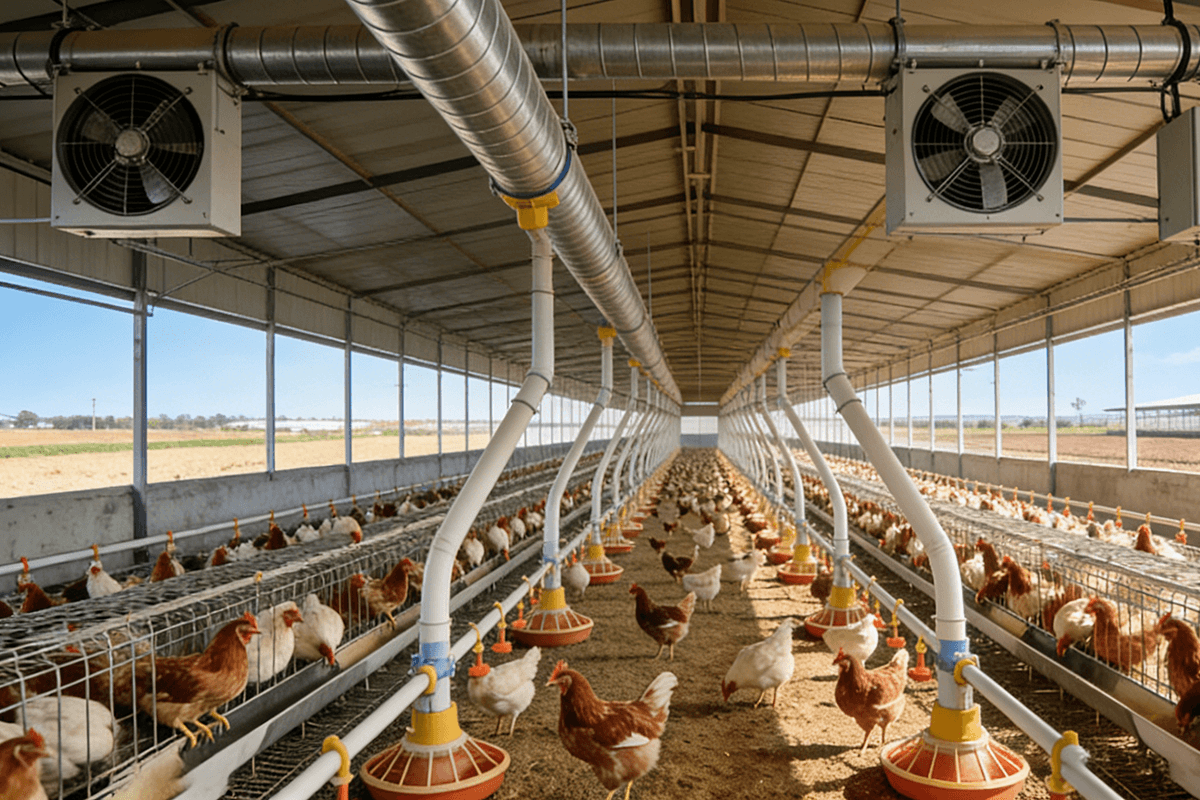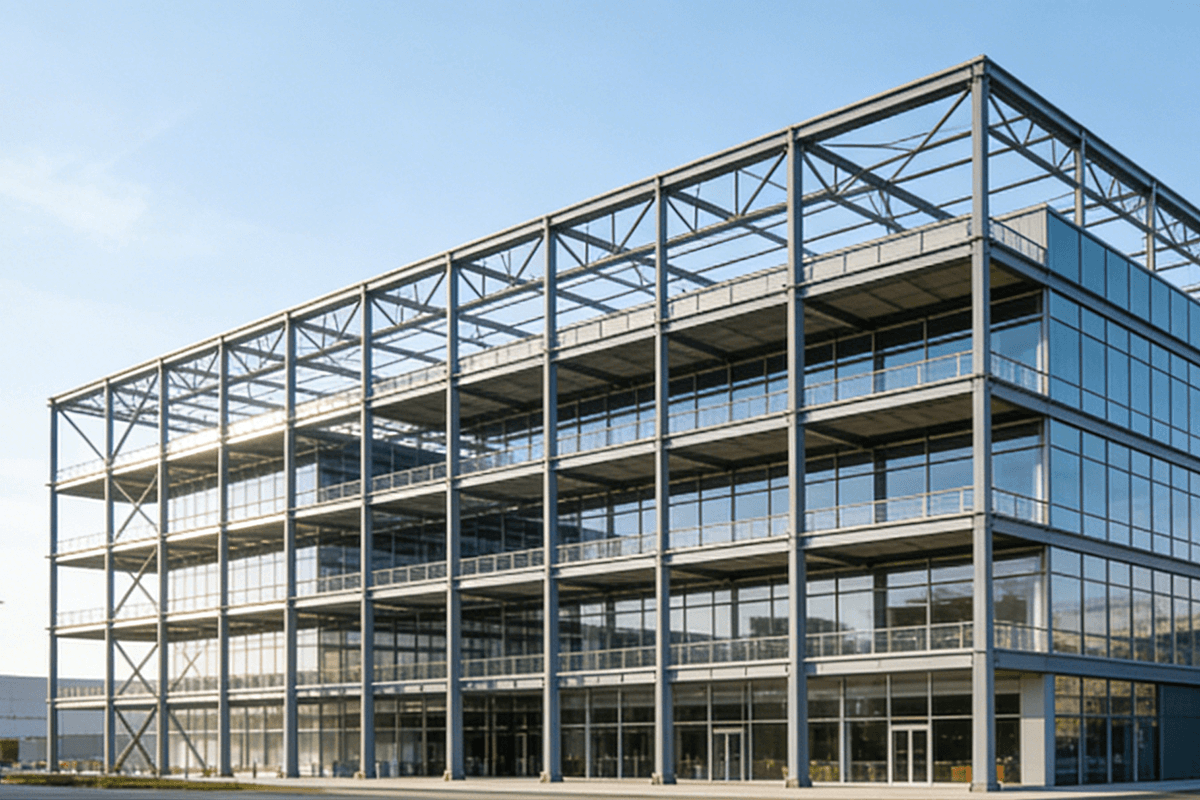
What if you’re building a poultry farm in Arkansas—but you’ve never designed a steel structure, selected insulation for humidity control, or even reviewed a wind load calculation? That’s where we step in—not with a quote, but with a field-tested, climate-adapted solution built from 23 years of real-world deployments across 30+ countries.
Tus Preocupaciones: Las Hemos Visto Todas
When clients like you reach out from Arkansas, we immediately recognize the core concerns: high summer humidity and winter freeze-thaw cycles stressing joints; strict APHIS biosecurity requirements; unpredictable spring winds demanding ASCE 7-compliant framing; and zero tolerance for corrosion in manure-rich environments. You don’t need theory—you need proof that what works in Thailand’s monsoon or Saudi Arabia’s desert also performs under Arkansas’ IBC Chapter 10 and Arkansas State Building Code.
Inspección a Nivel de Fábrica: No Solo Certificaciones en Papel
Every structural component leaving our facility carries traceable inspection records—not just “ISO9001 compliant,” but actual test data: galvanizing thickness measured per ASTM A123 (minimum 85 µm on primary members); weld penetration verified by ultrasonic testing on 100% of column base plates; and insulation core density logged for every batch of rock wool panels (120 kg/m³ ±5%, tested daily). We don’t accept “sample reports”—we ship with lot-specific mill certificates and third-party SGS reports included in the packing list.
Technical Solutions—Validated by Local Conditions
We don’t retrofit generic designs. For Arkansas poultry farms, our standard solution includes:
- Ventilation-first framing: Roof trusses spaced at 2.4 m to support continuous ridge vents + side-wall curtain systems—designed for 6–8 air changes/hour at 28°C/75% RH, validated using EnergyPlus thermal modeling;
- Corrosion defense system: Hot-dip galvanized H-beams (ASTM A588 Grade B) + PVC-coated purlins (UL 723 flame spread ≤25) — tested in 5% NaCl fog for 1,200 hours with zero red rust;
- Biosecurity-integrated envelope: Insulated sandwich panels with sealed tongue-and-groove joints, factory-applied silicone gaskets, and 0.5 mm aluminum cladding on interior faces—meets APHIS PS-101 for rodent-proofing and wash-down durability;
- Foundation-ready connections: Anchor bolt templates pre-drilled to match standard 300 mm-thick slab-on-grade footings—no field drilling required.
Supply Chain Transparency—From Raw Material to Site Delivery
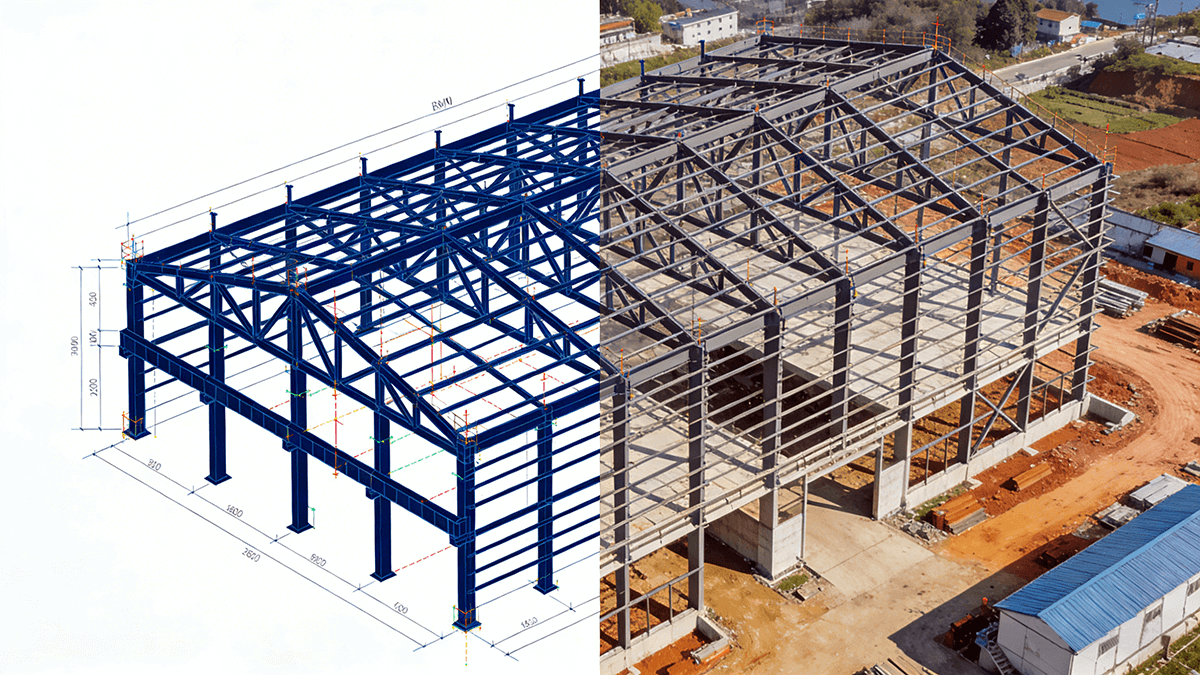
Recibirás un digital build package before production starts: full BIM model (Navisworks export), certified structural calculations (AISC 360-22), UL/FM material compliance matrix, and shipping manifest with container-level GPS tracking. Each coil of color-coated steel is tagged with its origin mill (Baosteel or POSCO), coating weight (Z275), and chromate passivation type—fully traceable via QR code on the bundle label.
Abnormality Management—No “Rework After Shipment”
Our production line uses real-time dimensional monitoring: laser scanners check purlin camber every 3 meters; torque sensors log every bolt tightening value; and thermal imaging validates PU foam fill uniformity in insulated panels. If any parameter drifts beyond ±1.5 mm or ±5% tolerance, the system auto-halts and flags the anomaly for engineering review—zero non-conforming items released without root-cause correction and client sign-off.
Orientación de Ciclo de Vida Completo: Más allá de la lista de materiales
We help you plan not just for Day 1, but Year 15: panel replacement intervals (12–15 years for exterior cladding in humid climates); recommended re-galvanizing schedule for exposed fasteners (every 8–10 years); and spare-part kits sized for 3% annual wear—pre-packaged and labeled for immediate field use. We also provide free corrosion mapping guidance for your maintenance team: where to inspect, what tool to use (digital coating thickness gauge), and when to intervene.
Soporte para socios: no solo servicio posventa
Asignamos un dedicado Project Technical Lead—a bilingual engineer with minimum 8 years in agri-structural projects—who joins your site meetings, reviews local soil reports, and coordinates with your Arkansas-based installer. If an issue arises during erection, our lead responds within 4 business hours with a written action plan—not just “we’ll send someone.” And yes—we maintain stocked inventory of critical spares (e.g., hinge brackets, sealant cartridges, anchor bolts) in Dallas, TX, for 48-hour ground delivery.
Cómo te servimos
No vendemos acero, entregamos. verified, installable, compliant poultry infrastructure. From initial layout sketch to final commissioning checklist, our EPC scope includes BIM coordination, stamped structural drawings, installation supervision, and operator training—all managed under one contract, one point of accountability, and one timeline. No subcontractor handoffs. No design-build gaps.
If you’re ready to move from uncertainty to execution—and want a partner who treats your Arkansas poultry farm like their own—share your site survey and local code references. We’ll respond within 5 business days with a tailored technical roadmap—not a PDF catalog, but a working plan you can take to your contractor, lender, or county planning office.