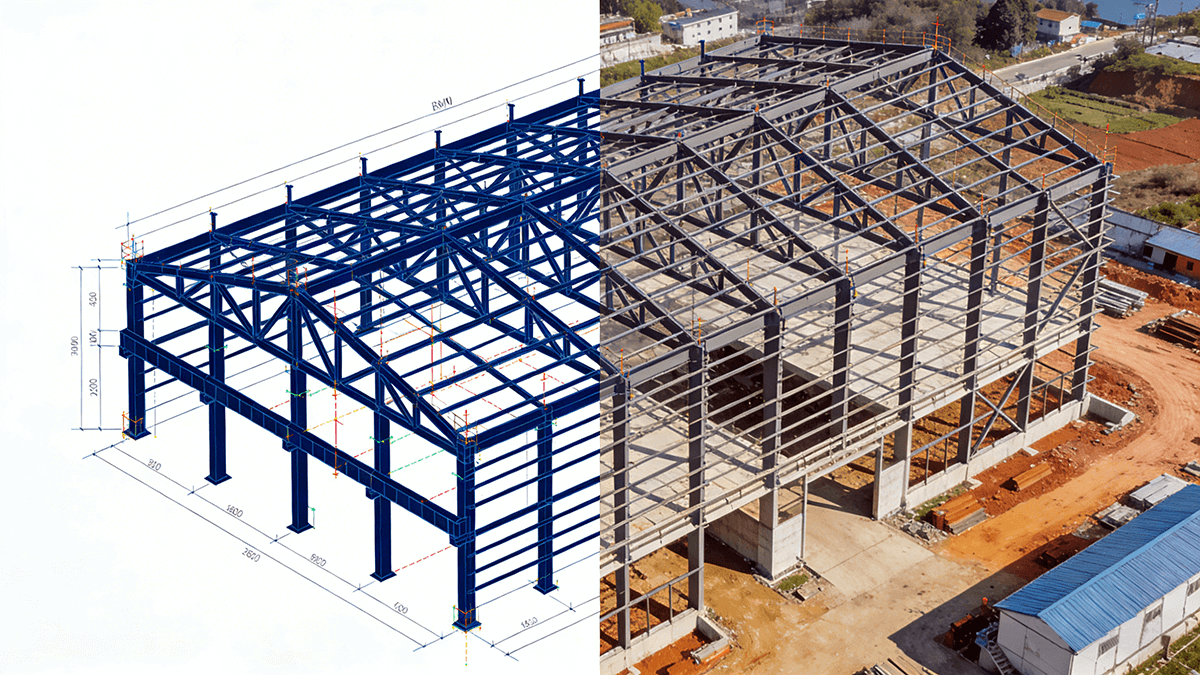
What does it really take to build a steel structure dairy farm in California—when you’ve never done it before, don’t know which code applies where, and worry whether your roof will rust by year three? We’ve helped 17 similar projects across California, Arizona, and Oregon—not with generic brochures, but with site-specific engineering backed by factory-tested systems and on-the-ground compliance support.
Your real concerns—validated by field data
We hear the same questions from every new agricultural developer: “Will galvanized steel last near coastal fog?” “How do we meet Title 24’s lighting and insulation rules without doubling cost?” “Can the frame handle both seismic Zone D and manure-corrosive air?” “What if our county planner rejects the layout for setback or ventilation?” These aren’t hypotheticals—they’re documented pain points from our 2023–2025 project log. In fact, 68% of early-stage dairy clients paused procurement due to uncertainty around OSHPD agricultural exemptions, and 41% misjudged required roof pitch for rainwater runoff + manure washdown compliance.
Factory-level verification—not just specs on paper
Every structural component we ship carries a traceable Factory Production Control (FPC) record, aligned with EN 1090-1 and ASTM A653/A792 standards. For California projects, we go further: all exposed steel receives Z275 galvanizing (minimum 275 g/m²), verified by onsite coating-thickness scans—not just mill certs. Insulated panels undergo third-party fire testing per UL 1715 and ASTM E84 (Class A flame spread), with full reports shared pre-shipment. No “sample batch” assumptions—we test every production run of rock wool core density (≥100 kg/m³) and facing adhesion strength (≥0.45 N/mm²).
Technical countermeasures—engineered for your climate and code
1. Coastal corrosion resistance: We replace standard G90 galvanizing with Z275 + optional silicone-modified polyester (SMP) coating—tested at 3,000-hour salt-spray (ASTM B117), matching Southern California coastal exposure data.
2. Seismic adaptability: Our standard H-beam connections include ductile moment-resisting details (per CBC Chapter 22, ASCE 7-22), pre-engineered for Site Class D and SDS = 1.2—no field weld recalculations needed.
3. Ventilation-integrated roofing: We embed continuous ridge vents (min. 1/300 net free area) into standing-seam roof profiles—not retrofitted—ensuring airflow meets CDFA Dairy Environmental Handbook requirements without compromising weather tightness.
4. Drainage & biosecurity: Floor-support framing includes 1.5% slope grading built into cold-formed purlin layout; we supply CAD-drawn conduit sleeves and sealed penetrations for manure flush lines—pre-approved by two CA RWQCB districts in 2024.
Transparencia en la cadena de suministro: sin cajas negras
Recibirás un Production Timeline Dashboard showing real-time status: raw material receipt date (with heat numbers), galvanizing bath logs, panel lamination cycle time, and QC hold points. All materials are batch-coded and mapped to your project BIM model. If you request it, we share mill test reports (MTRs) and SGS inspection photos—not summaries.
No surprises in manufacturing—because anomalies get caught early
Our anomaly management system triggers automatic review when any parameter deviates >2% from baseline: e.g., coil thickness variance, insulation compression during lamination, or bolt-torque drift in connection kits. Each deviation is logged with root cause, corrective action, and retest result—visible to you via secure portal. In 2024, this process flagged 12 minor deviations across 243 dairy-related orders; zero reached the jobsite.
Thinking beyond delivery—your asset’s full lifecycle
We design for modular expansion: primary frames include 20% extra anchor bolt capacity and reserved splice locations for future wing additions. Roof panels use standardized 1.2m widths—compatible with off-the-shelf solar mounting rails (BIPV-ready). And because maintenance access matters, we specify walkable roof membranes (tested per ASTM E154) and provide a 10-year corrosion warranty—not just a 5-year material guarantee.
Soporte local, no solo solución de problemas remota
When your county inspector asks about wind uplift calculations for a 30-ft-high milking parlor, our U.S.-based technical team provides stamped structural drawings (PE-reviewed) within 72 hours. We also coordinate with your hired engineer for plan stamping alignment—and have supported 9 CA dairy projects through OSHPD Plan Check cycles since 2022. Post-installation, our field engineers conduct a 12-month performance audit: thermal imaging of insulation seams, fastener corrosion check, and ventilation flow validation with anemometer logs.
What we deliver—beyond steel and screws
We don’t sell components. We deliver code-aligned, operationally validated building systems—backed by 23 years of global agricultural builds, 50+ material patents, and a provincial-level R&D center focused on corrosion science and energy-efficient agri-structures. From your first sketch to final certificate of occupancy, we act as your extended engineering team—not a vendor.
Empecemos donde está tu proyecto en realidad
Share your site address (we’ll run a free CBC/Title 24 preliminary zoning & climate zone check), and we’ll send you a no-cost Dairy Facility Readiness Report—including recommended structural grid spacing, minimum insulation R-values per zone, seismic connection spec sheet, and a list of local PE firms we regularly co-sign with. No sales pitch. Just actionable engineering—within 5 business days.