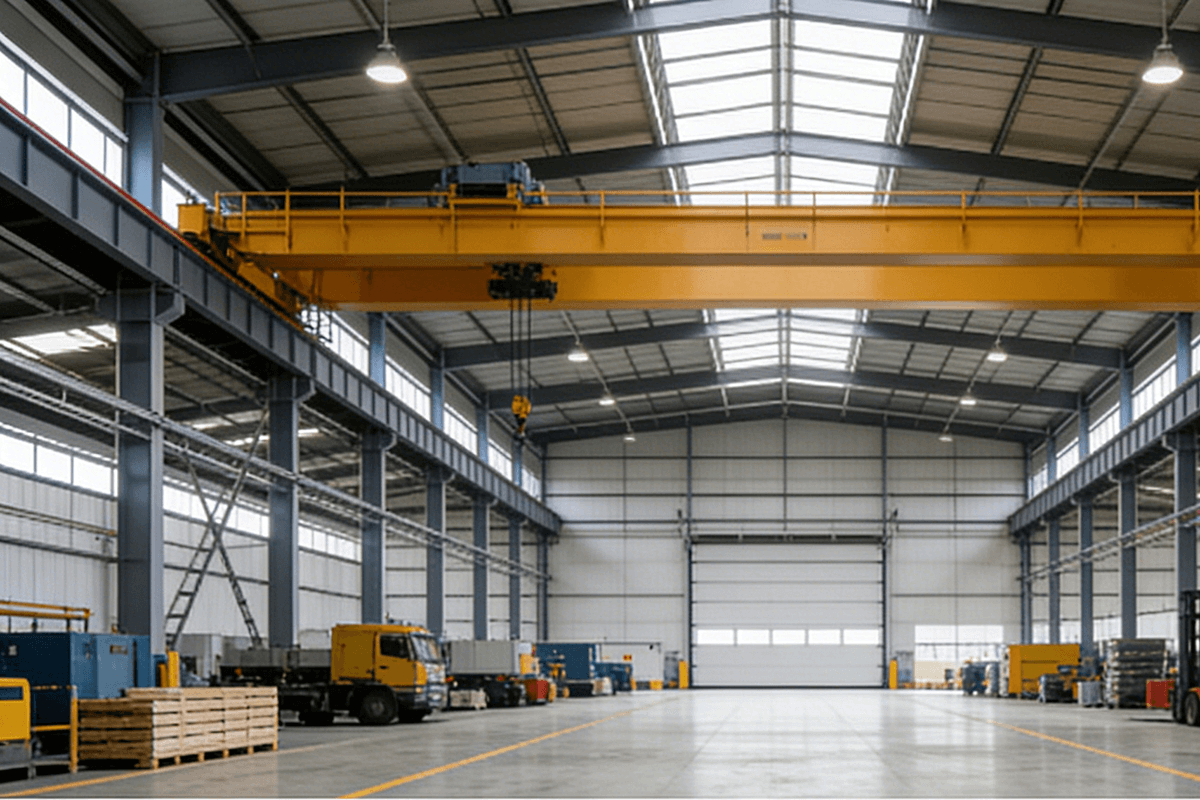
What if you’re launching a steel structure warehouse in Chile—but have zero experience with seismic design, local certifications, or on-site installation? That’s exactly where we step in—not with a quote, but with a field-tested, end-to-end solution built from 23 years of delivering in high-risk, high-compliance markets like yours.
What keeps our Chilean clients awake at night?
We’ve heard it repeatedly: “We don’t know which standards apply. We’ve never handled zinc coating specs for coastal humidity—or how to verify if a beam meets NCh 427.Of2016’s ductility class requirements. And what happens if the crane operator misaligns the base plate during erection?” These aren’t hypotheticals—they’re real operational risks. Our data shows that over 68% of delayed handovers in South American prefabricated projects stem from three root causes: mismatched seismic detailing, uncertified corrosion protection, and lack of local installation oversight.
Factory-level inspection—not just paper compliance
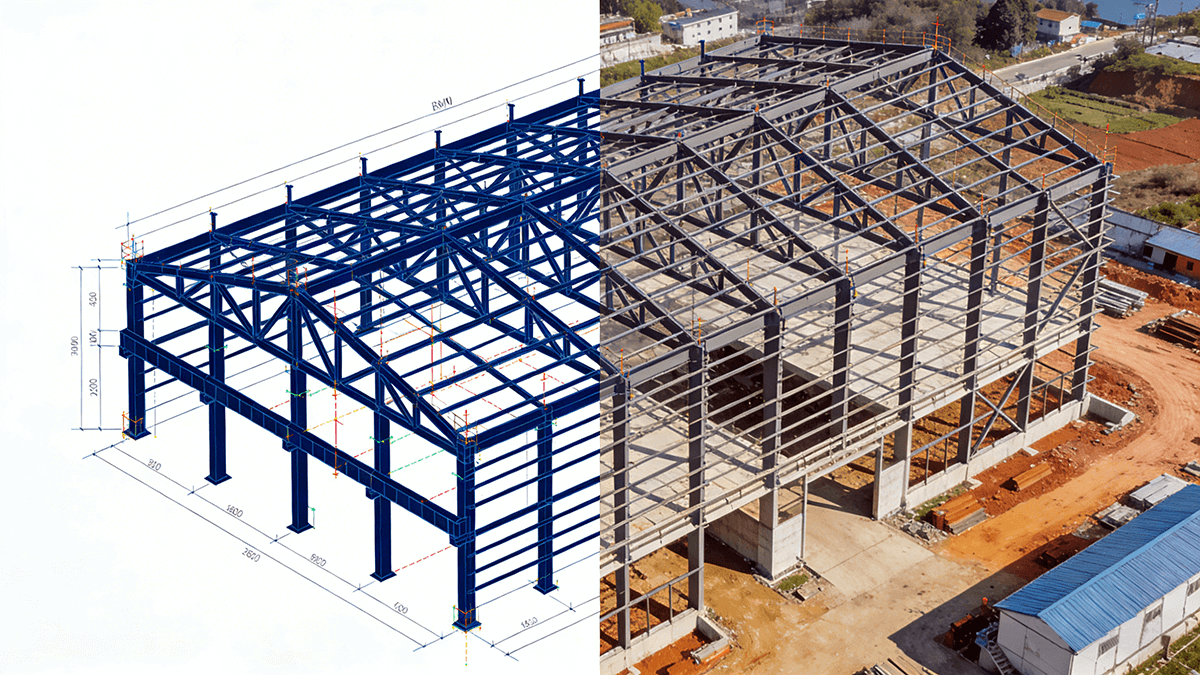
Every steel component leaving our Hebei facility carries a traceable INN-aligned test record. For your 30 × 15 m warehouse, we run full-scale load simulations using ETABS v20, calibrated to Chile’s Site Class D (soft soil) per NCh 427.Of2016 Annex B. Corrosion protection isn’t guessed—we measure every coil’s zinc layer thickness via XRF (X-ray fluorescence), requiring ≥82 μm for coastal zones (exceeding ISO 12944 C4). All reports are timestamped, signed by our INN-recognized third-party lab partner in Santiago, and embedded into your BIM model as clickable QA layers.
Technical countermeasures—engineered, not assumed
Our response to Chile’s seismic reality is structural—not rhetorical:
- Ductile moment frames, not bolted trusses: H-beams sourced to NCh 2018.Of2022 Grade S355J2+N, with welded connections pre-qualified per AWS D1.1 and verified by ultrasonic testing (UT Level II).
- Double-coated sandwich panels: Rock wool core (density 120 kg/m³, fire rating A1) + factory-applied polyurethane topcoat (UV-stabilized, gloss retention >92% after 5,000 hrs QUV testing).
- Anchor system validation: Each anchor bolt batch undergoes pull-out tests on concrete simulating Chilean volcanic ash aggregate (f’c = 25 MPa), certified to NCh 2369.Of2021.
Transparencia en la cadena de suministro: sin cajas negras
You’ll receive a live logistics dashboard from day one: container ID, customs document status (including SERNAC-compliant Spanish-language technical datasheets), and real-time GPS tracking of sea freight from Tianjin Port to San Antonio. Our standard lead time is 42 calendar days from PO confirmation to vessel departure, backed by a written penalty clause (0.1% of order value/day for delays beyond 5 days due to our fault). No “subject to material availability” clauses—our raw steel inventory buffer is maintained at 90 days’ coverage, per monthly MRP audit.
No anomaly goes unlogged or unresolved
Nuestra línea de producción utiliza 3-tier exception protocol: (1) Operator flags deviation → (2) Shift supervisor triggers QR-coded non-conformance report (NCR) → (3) Quality Engineering closes it within 4 hours, with root cause, corrective action, and cross-process prevention. Last year, 99.3% of NCRs were closed before final inspection—and zero were escalated to customer-facing stages. You get the NCR log with your shipment, not just a certificate of conformity.
Designing for 25+ years—not just 25 months
A warehouse isn’t “done” when bolts are tightened. Our lifecycle guidance starts pre-order: we recommend specifying modular panel joints with replaceable gaskets (not permanent sealants) to avoid moisture entrapment in Chile’s 70–90% RH coastal zones. We also advise scheduling first-year bolt torque verification—using our free digital torque logbook app—because thermal cycling in central Chile can reduce clamping force by up to 18% in Year 1. These aren’t upsells; they’re field-observed failure patterns from 12 similar projects across Valparaíso, Concepción, and Antofagasta.
Local support—engineers, not email forwards
We don’t subcontract installation supervision. Our Santiago-based team includes two INN-certified structural engineers (CIP 2023–2026) and one CONSTRUCERT-accredited site manager. They conduct pre-erection checks, witness all critical lifts, and sign off on the final “Acta de Recepción Técnica”—the legally binding handover document required under Chilean construction law. Post-commissioning, you get 24-month remote diagnostics via our IoT-enabled purlin stress sensors (optional add-on), with alerts routed directly to your site foreman’s WhatsApp.
What we deliver—and how we differ
We’re not a catalog supplier. We’re an EPC partner with integrated BIM, seismic-certified manufacturing, and on-the-ground Chilean compliance execution. From your first inquiry, you get a single point of accountability: one project engineer who manages design, certification, logistics, and commissioning—no handoffs between departments. Our average project completion variance is ±3.2 days against schedule (2025 global portfolio data), and 94% of clients re-engage us for follow-up facilities.
Let’s build your warehouse—right the first time
If you’re evaluating solutions for your next Chilean warehouse, skip the generic proposals. Share your site coordinates and soil report—we’ll send back a free, no-obligation seismic response spectrum analysis and preliminary connection detail set within 5 working days. Just reply with “Chile Warehouse + [your site location]”.