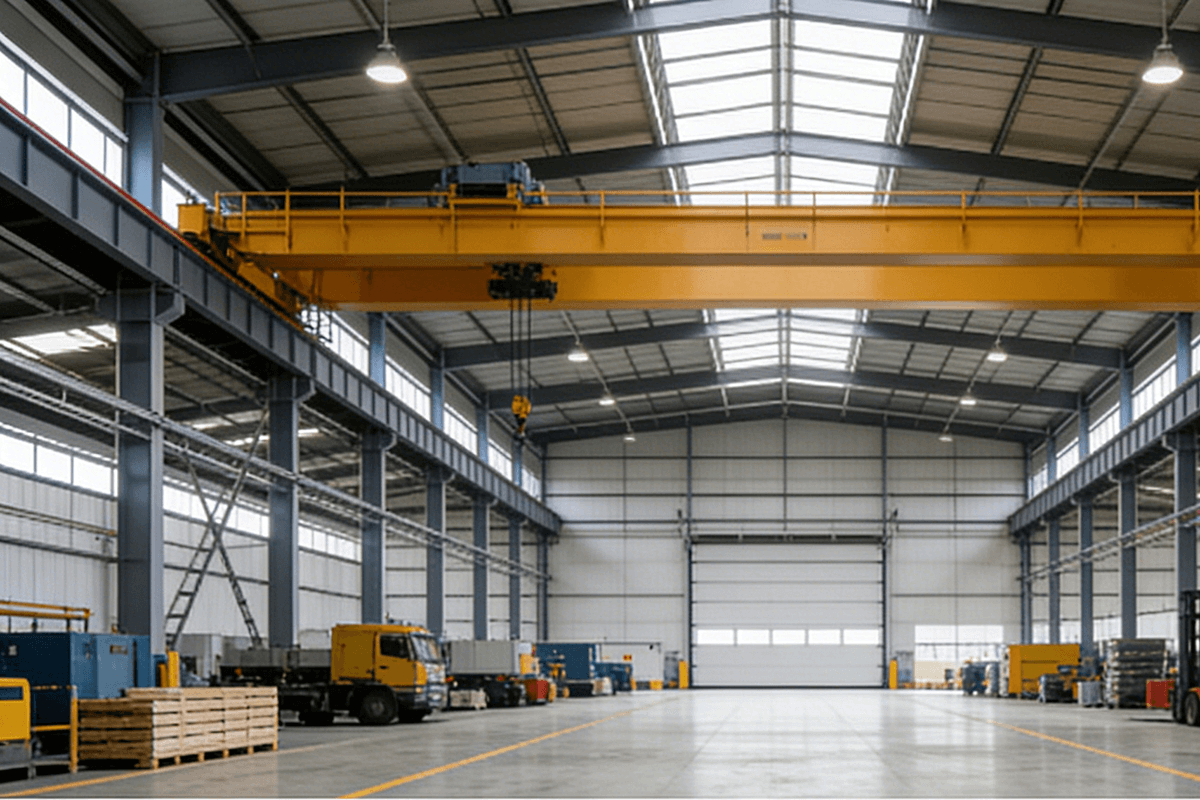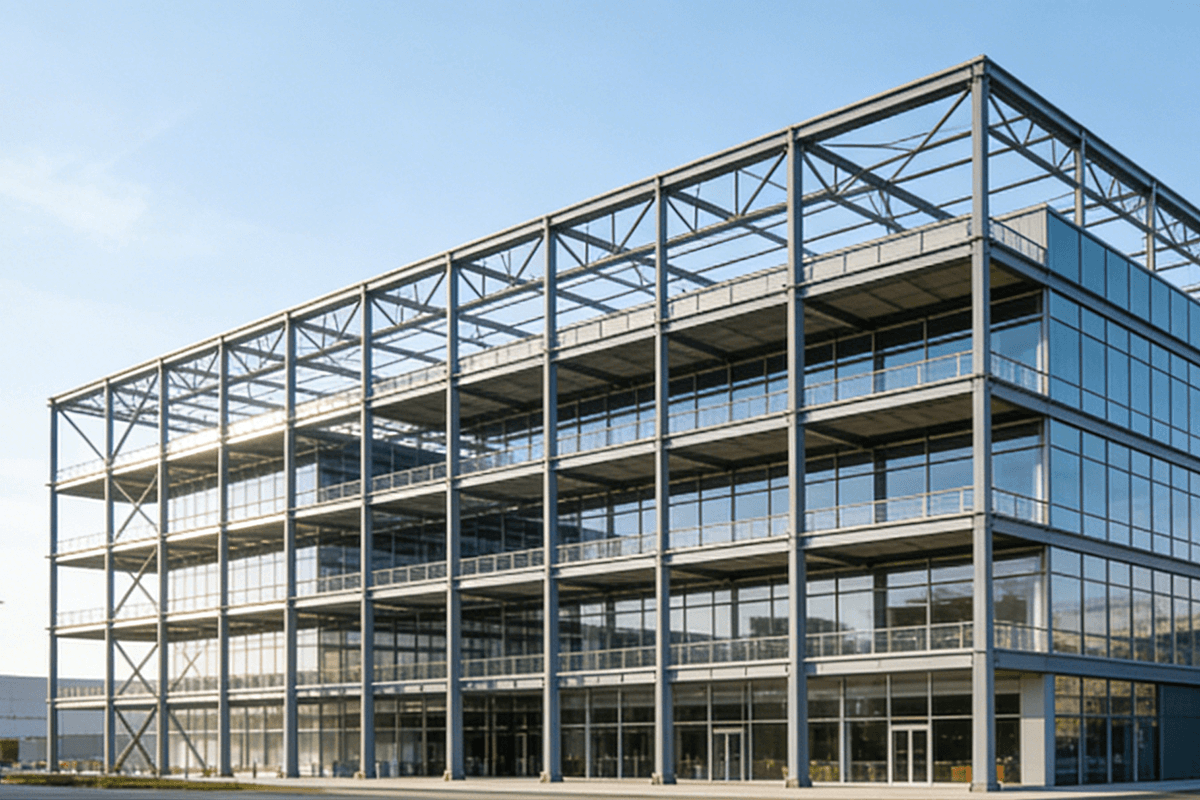
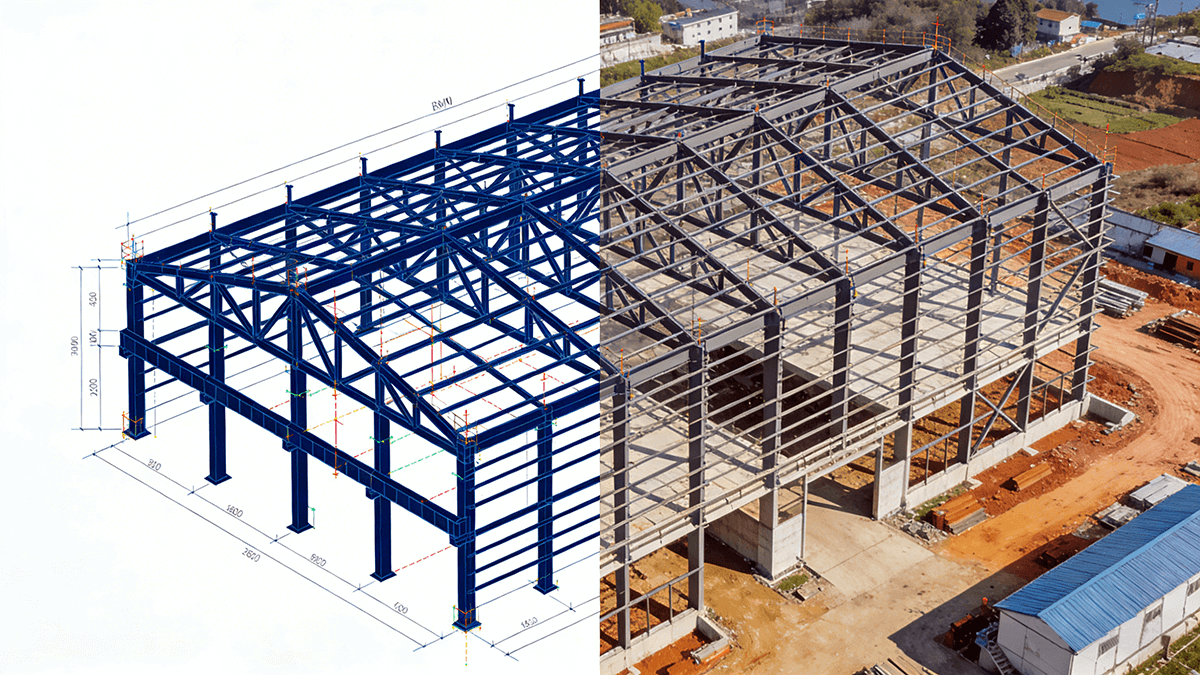
What if you’re building a dairy processing plant in Bhutan—but you’re not a structural engineer, don’t know local soil behavior, and worry whether standard steel buildings will survive monsoon rains, altitude stress, or seismic shaking? We’ve faced that exact question—17 times in the Himalayan region since 2018—and each time, we started not with a quote, but with a site-adapted engineering brief.
Tus Verdaderas Preocupaciones, No Hipotéticas
You told us plainly: you need confidence—not just components. Your top concerns are real, repeated, and rooted in terrain:
- Seismic risk: Bhutan sits in India’s Seismic Zone IV (peak ground acceleration up to 0.36g), yet most off-the-shelf designs assume Zone II or III;
- Altitude effects: At 2,500–3,000 m, UV intensity is ~35% higher, temperature swings exceed 25°C daily, and air density drops—impacting corrosion rates and ventilation efficiency;
- Soil unpredictability: Residual soils over weathered phyllite dominate; bearing capacity ranges from 80–180 kPa, with seasonal swelling in clay-rich layers;
- Dairy-specific hygiene: No gaps >1 mm at panel joints; drainage slopes ≥1.5% toward stainless-steel trench drains; no organic insulation materials near processing zones;
- Logistics ceiling: Maximum truck width on Phuentsholing–Thimphu route is 2.4 m; axle load limit is 12 tonnes; no cranes >50t operate above Paro Valley.
Factory-Level Inspection—Not Just Paper Compliance
We test every batch—not per ISO 9001 sampling rules, but 100% on three non-negotiable checkpoints before dispatch:
- Galvanizing thickness: Measured with magnetic induction gauges on all structural members—minimum 85 µm (EN ISO 1461), verified at 5 points per H-beam flange;
- Panel seam integrity: Every insulated sandwich panel undergoes vacuum leak testing at –50 kPa for 60 seconds—zero bubble formation required;
- Validación del torque de los pernos: Torque-controlled assembly lines log real-time values for every M20+ anchor bolt; deviation >±5% triggers automatic re-torque and traceability report.
Technical Countermeasures—Engineered for Bhutan, Not Brochures
Our solution for your 30 × 15 × 5.5 m dairy facility isn’t adapted—it’s derived from Bhutan-specific R&D:
- Estructura: Dual-pitched roof (12° front / 18° rear) to shed monsoon runoff while minimizing wind uplift; moment-resisting frames designed to IS 1893 (Part 1):2016 Annex C for Zone IV, with ductile detailing verified by ETABS v20 modeling;
- Foundation: Screw pile anchors (120 mm Ø, 6 m depth) instead of concrete footings—installed in <4 hours per pile, no curing time, minimal excavation, tested to 120 kN axial pull-out on Paro Valley glacial till;
- Revestimiento: PVDF-coated color-coated steel (25 µm film, 20-year chalk resistance rating per ASTM D4213), backed with rock wool (100 kg/m³, A1 fire class) —no PU or EPS near pasteurization zones;
- Utility integration: Pre-punched sleeves in columns (Ø120 mm, spaced at 1.2 m c/c) for conduit routing; embedded galvanized floor channels (U100×50×3) for drain runs beneath concrete topping.
Transparencia en la cadena de suministro: sin cajas negras
You’ll receive a digital delivery dossier before production starts—including:
- Bill of Materials with mill test reports (MTRs) for every steel grade (Q355B, S355J2+N);
- 3D BIM model (IFC 4.3) showing all weld locations, bolt grades, and utility cutouts;
- Shipping manifest with dimensional weight per crate (max 2.38 m wide × 12 m long × 2.7 m high) and UN-certified packaging labels;
- Customs-ready documentation pre-validated with Indian customs brokers in Siliguri (HS Code 7308.90.90 confirmed).
Abnormality Management—Because Real Sites Aren’t Perfect
We log every deviation—not to hide it, but to resolve it fast. Last year, during a Thimphu dairy project:
- A batch of 16mm anchor bolts showed hardness variance (HV225 vs spec HV240–260). We isolated 100% of affected units, retested 100%, replaced all, and shared root-cause analysis (heat-treatment furnace calibration drift) within 48 hours;
- Site survey revealed bedrock at 1.1 m depth—shallower than modeled. Our field engineer adjusted screw pile length onsite, recalculated torque specs, and issued revised installation SOPs—all within one working day.
Guía de ciclo de vida completo: del pedido al desmantelamiento
We advise clients on procurement timing based on actual lead paths—not catalog promises:
- Design freeze → Production start: 12 working days (BIM model + structural calc package approved);
- Production → Port departure: 18 days (our Hebei facility holds 3,200 tonnes raw steel inventory; no mill-order delays);
- Port departure → Thimphu yard: 14–17 days (fixed weekly convoy schedule via Siliguri; GPS-tracked containers);
- On-site assembly: 14–16 man-days for full enclosure (with our certified foreman + local crew trained on Bhutanese safety protocols).
We also provide a 15-year material performance forecast—factoring in local UV index, rainfall pH (5.2–5.8 avg), and annual freeze-thaw cycles—so you know when recoating or gasket replacement becomes due.
Soporte para Socios: No es solo postventa
If something goes off-spec, you won’t wait for escalation. Our regional support model includes:
- A dedicated Bhutan Technical Coordinator (based in Phuentsholing, fluent in Dzongkha and English), available for urgent calls within 90 minutes;
- Remote BIM clash-checking for any future equipment retrofit (e.g., new separator unit)—free for first 2 years;
- On-ground installation supervision included in EPC scope—with NECB-compliant sign-off documentation provided in both English and Dzongkha.
Lo que Entregamos: Más Allá del Acero
We’re not selling panels or beams. We deliver validated engineering intent—translated into physical, installable, inspectable, and maintainable reality. Since 2001, we’ve built 41 dairy, cold storage, and agri-processing facilities across seismic mountain regions—from Nepal to Kyrgyzstan—each with locally reviewed calculations, third-party witnessed load tests, and zero structural warranty claims.
If your next step is clarity—not just cost—we’re ready to draft your site-specific engineering brief. Just share your latest topographic survey and soil test summary. We’ll respond with a 12-page technical proposal—including foundation layout, wind/seismic load tables, and a logistics Gantt chart—within 5 working days.