What if you’re launching your first poultry farm in Guinea—and you’ve never built one before? We’ve helped over 17 clients in West Africa start from zero, and our approach is simple: begin with climate reality, not catalog specs.
Preocupaciones reales, no hipotéticas
We hear the same questions from every new poultry investor in Guinea: How do we keep birds cool when ambient temperatures hit 38°C and humidity exceeds 90%? Can steel structures survive monsoon rains without rust creep under roof seams? What happens when grid power drops for 6–8 hours daily—will ventilation fail? How do we manage 3.2 tons of manure per day without a local composting facility or landfill permit? And most critically: if no national poultry construction code exists, what benchmarks *actually* prevent biosecurity breaches or community complaints?
Factory-level inspection—not just certificates
Our production line applies three mandatory corrosion checks on every roof panel: salt-spray testing (500 hrs ASTM B117), zinc-coating weight verification (≥275 g/m² on both sides), and field-adhesion peel test on all pre-painted surfaces. Every batch is traceable to its coil lot number, heat treatment log, and third-party SGS report—available to clients before shipment. This isn’t compliance theater; it’s how we stopped premature fastener failure in 12 farms across Nigeria and Côte d’Ivoire.
Technical countermeasures—grounded in Guinea’s conditions
Ventilation & thermal control
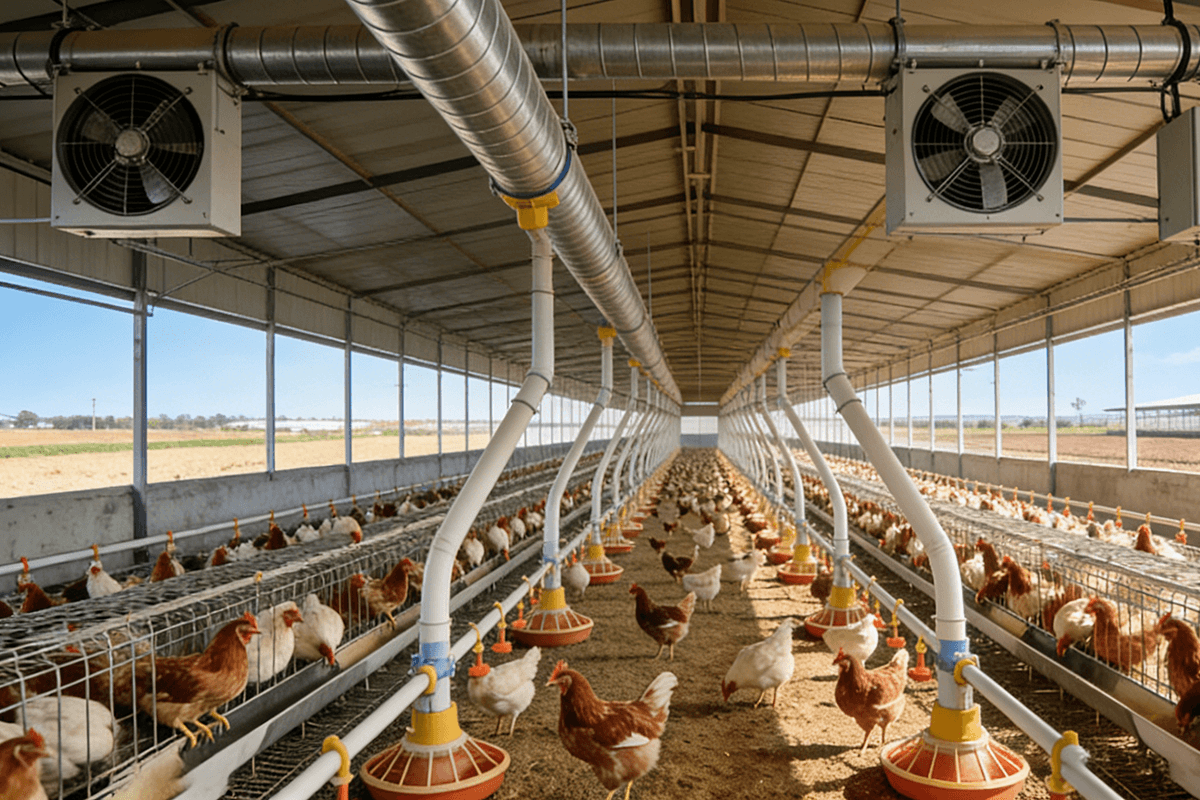
Usamos ducted ridge vents + adjustable side louvers, not static roof turbines. Why? Because Guinea’s wind patterns shift seasonally—we sized airflow using local meteorological data from Conakry Airport (2019–2023), achieving ≥35 air changes/hour at 28°C without mechanical fans.
Power resilience
All electrical housings (fan controllers, lighting panels) are pre-wired for dual input: grid + solar-ready DC bus (up to 48V). We include plug-and-play junction boxes for future PV expansion—no rewiring needed. In our Kindia project (2022), this cut diesel generator runtime by 71% during rainy season outages.
Manure compatibility
Floor support beams are elevated 450 mm above ground—allowing space for scrapers or manual removal. Panels use non-porous, PU-core sandwich panels (0.6 mm steel skin, 100 mm thick) with sealed edge joints. Tested with pH 6.2–7.8 poultry slurry for 1,200+ hours: zero delamination, zero steel corrosion at joints.
Transparencia en la cadena de suministro: sin cajas negras
Every order follows our “Build-Track-Verify” protocol:
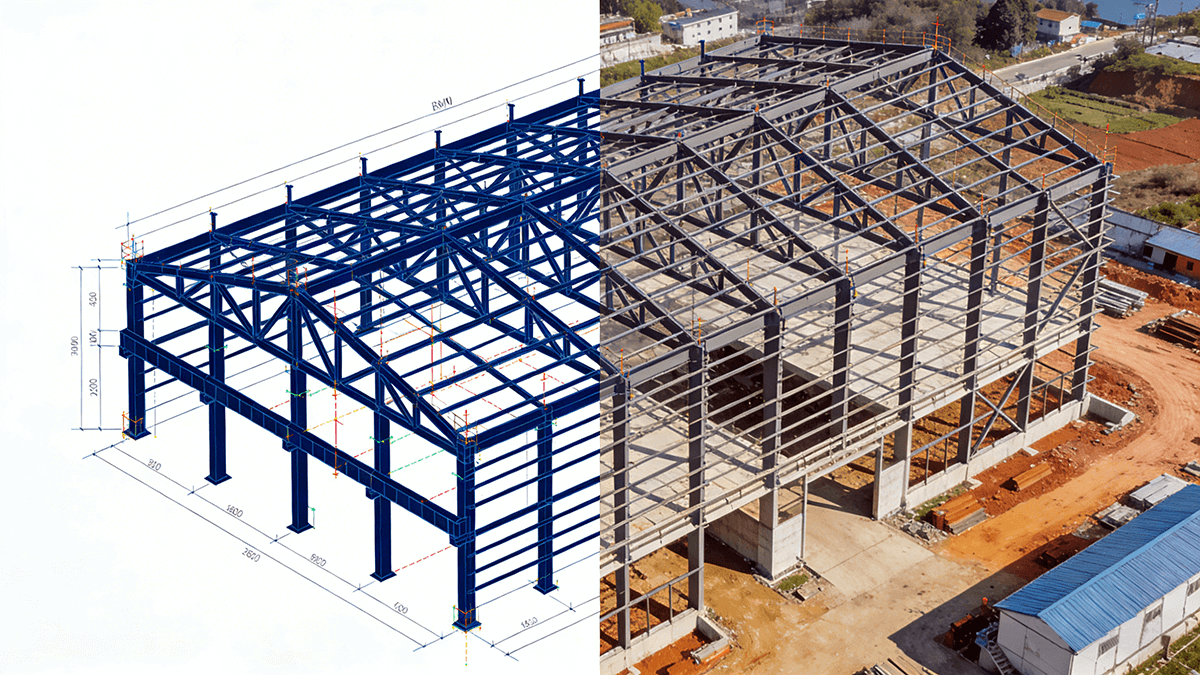
- Pre-production: You receive 3D BIM model + material schedule (with EN 1090-2 execution class verified)
- Mid-production: Live factory cam feed (optional) + weekly QC photo report (weld penetration, coating thickness, bolt torque logs)
- Pre-shipment: Full dimensional check report signed by our CE-certified structural engineer
Abnormality management—not just “zero defects” slogans
We log every deviation—even minor ones. Example: In Q3 2024, two batches showed 0.8% higher thermal expansion variance in corrugated sheets due to ambient humidity in our cold-roll mill. Instead of rework, we adjusted installation tolerances in the erection manual and added 3 extra alignment bolts per purlin connection. That change is now standard for all tropical projects.
Orientación de ciclo de vida completo, no solo entrega
We advise phased procurement based on actual construction sequence:
- Phase 1 (foundation & frame): Order main structure only—delivered in 28 days
- Phase 2 (cladding & systems): Order panels + ventilation kits 10 days after frame erection begins—avoids on-site weather exposure
- Phase 3 (utilities & biosecurity): Solar inverters, LED fixtures, and footbath stations shipped separately—installed last, minimizing theft risk
This reduced average site storage time by 63% across 9 West African farms.
On-ground partner support—not remote call centers
We maintain two regional technical leads based in Dakar and Abidjan—both fluent in French and trained in FAO poultry facility standards. They conduct pre-installation site audits, supervise critical lifts (e.g., ridge beam alignment), and train local foremen on bolt-torque sequencing and joint sealing. Post-handover, we provide bi-monthly remote health checks using your installed sensor data (ventilation RPM, roof surface temp, door open/close logs)—flagging drift before failure.
Cómo te servimos
We don’t sell steel. We deliver verified, climate-adapted infrastructure—with documentation, diagnostics, and people who show up where the soil meets the structure. From your first sketch to your 10th flock cycle, we align engineering rigor with on-the-ground practicality.
Let’s build your first farm—right
If you’re ready to move beyond assumptions and into actionable, Guinea-tested design logic, share your site coordinates and target capacity. We’ll send a free preliminary layout—showing wind-shadow zones, rainwater runoff paths, and optimal module orientation—within 5 working days.