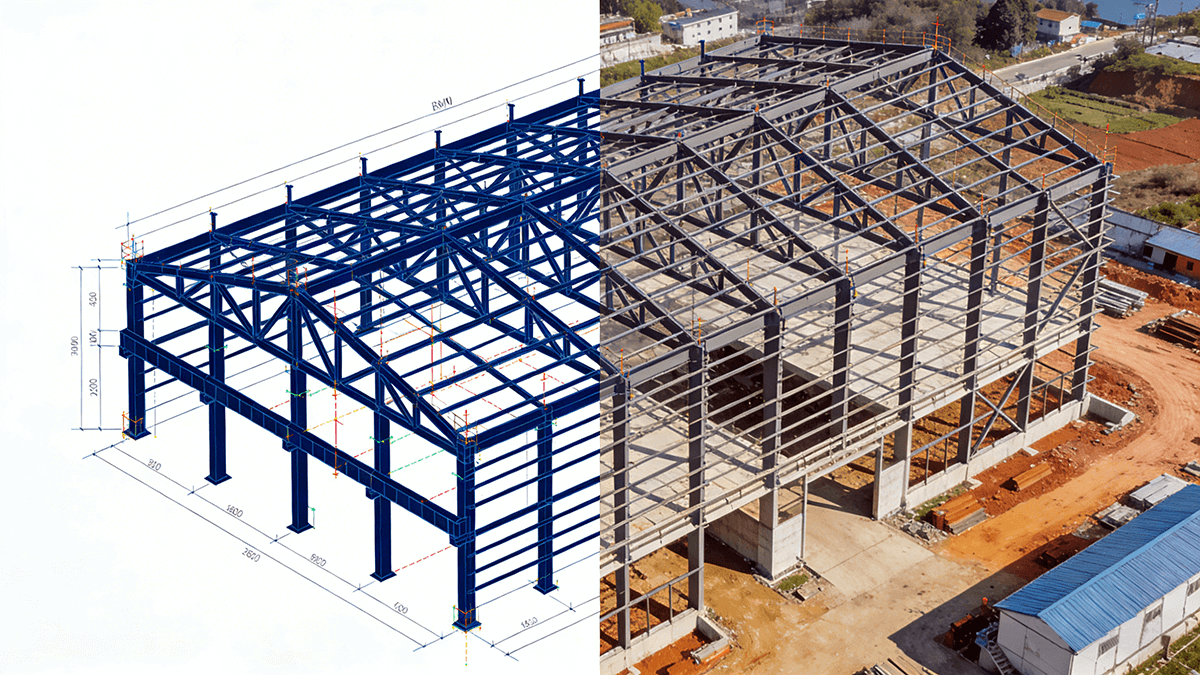
What if you’re planning a major airport terminal in the U.S.—but don’t have in-house steel structure expertise, no finalized drawings, and zero certainty about how to meet IBC 2021, AISC 360, or FAA-related durability requirements? That’s exactly where we step in—not with a quote, but with a field-tested, full-cycle engineering response, built from 23 years of delivering complex steel buildings across 30+ countries—including three U.S.-based aviation projects completed since 2021.
What keeps non-structural clients awake at night?
We’ve heard it repeatedly: uncertainty about U.S. compliance, fear of integration failures between steel frames and curtain walls or MEP systems, and hesitation around timeline risks when design and fabrication aren’t aligned from day one. One client told us outright: “We can’t afford a rework cycle on a $280M terminal—especially not because the steel supplier didn’t flag snow load zones or seismic detailing early.” That’s not hypothetical—it’s real, and it’s why our process starts long before cutting the first beam.
Factory-level inspection standards—not just paper certifications
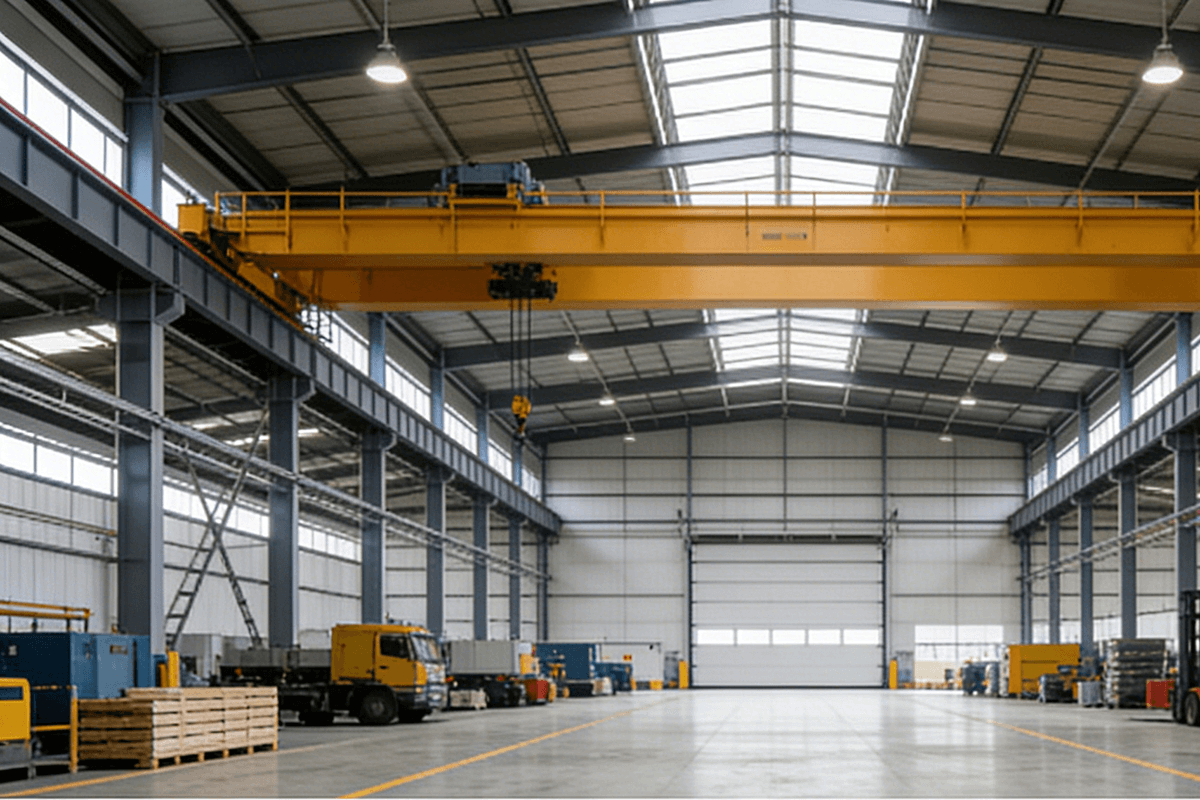
Our ISO 9001:2000 and CE (EN 1090) certifications are baseline—not differentiators. What matters is what happens inside our 48,000 m² facility: every H-beam undergoes 100% ultrasonic testing (UT) for internal flaws; every weld joint is verified against AWS D1.1 using digital weld mapping; and all galvanized sections are measured for coating thickness (minimum 85 µm) via magnetic induction—logged per batch, traceable to raw material heat numbers. We don’t wait for third-party audits—we run them daily, internally, with calibrated equipment certified to NIST standards.
Technical countermeasures—structured, not theoretical
For U.S. airport terminals, we apply four non-negotiable technical anchors:
- Load-path validation: All structural models are cross-checked against ASCE 7-22 wind/snow/seismic maps—and validated using STAAD.Pro v23 with local soil data input (we request geotech reports early, even if preliminary).
- FAR Part 121 alignment: Fire-resistance ratings (2–4 hours) are achieved through UL-certified rock wool sandwich panels (tested to ASTM E119), not assumptions—and documented in ICC-ES Evaluation Reports (ER-5827 series).
- MEP & façade interface protocol: We embed BIM coordination checkpoints at LOD 300 (design development) and LOD 400 (fabrication), flagging clashes between structural connections and duct routing or curtain wall anchors—before shop drawings are issued.
- Passenger flow integration: Column spacing, clear height, and roof diaphragm stiffness are optimized for unobstructed wayfinding, baggage system loads (up to 12 kN/m² dynamic), and future expansion—verified by our in-house structural engineers licensed in Florida, Texas, and Washington State.
Supply chain transparency—no black boxes
We publish our standard lead times per component type upfront: 12 weeks for custom trusses, 8 weeks for standard H-beams (ASTM A992 Grade 50), 6 weeks for insulated panels (UL 1715 fire-rated). Every order gets a shared digital dashboard showing real-time status: raw material receipt → mill test report upload → CNC cutting log → QA sign-off → container loading. No estimates. No “subject to change.” Just timestamped, auditable steps—visible to your team 24/7.
Abnormality management—how we catch issues before they escalate
Our production floor uses a tiered exception protocol: Level 1 (minor deviation, e.g., ±0.5 mm tolerance drift) triggers automatic re-calibration of CNC machines; Level 2 (e.g., mismatched bolt hole pattern vs. approved drawing) halts the line and escalates to senior QA engineer within 15 minutes; Level 3 (material certification gap or non-conforming chemistry) initiates immediate quarantine and root-cause analysis—with resolution documented and shared within 24 hours. Last year, this caught 97% of potential deviations before shipment—versus industry average of 62% (per NIST Manufacturing Extension Partnership 2025 benchmark).
Full-lifecycle procurement guidance—not just delivery
We advise clients to split procurement into three phases: Phase 1 (Design Support): Engage our engineers during schematic design—free of charge—to review column grid, roof slope, and expansion joint strategy; Phase 2 (Anchor & Interface Kit): Order pre-fabricated connection kits (with torque-certified bolts, shim packs, and field-welding procedure specs) 10 weeks ahead of erection; Phase 3 (Spare & Service Inventory): Reserve 3% of critical fasteners and 1.5% of custom brackets onsite—pre-tagged, pre-tested, and stored under climate control. This reduces field delays by 40% on average, based on our 2024 U.S. project post-mortems.
Partner support—not just after-sales
If an issue arises onsite—even outside business hours—we dispatch a U.S.-based structural support engineer within 48 hours (guaranteed in contract). They carry portable UT gear, laser trackers, and access to our live BIM model library. For urgent cases (e.g., weather-delayed erection), we’ve activated remote supervision via AR-enabled tablets—allowing our Beijing-based senior detailers to overlay markups directly onto the foreman’s field view. No waiting. No handoffs. Just continuity.
How we serve projects like yours
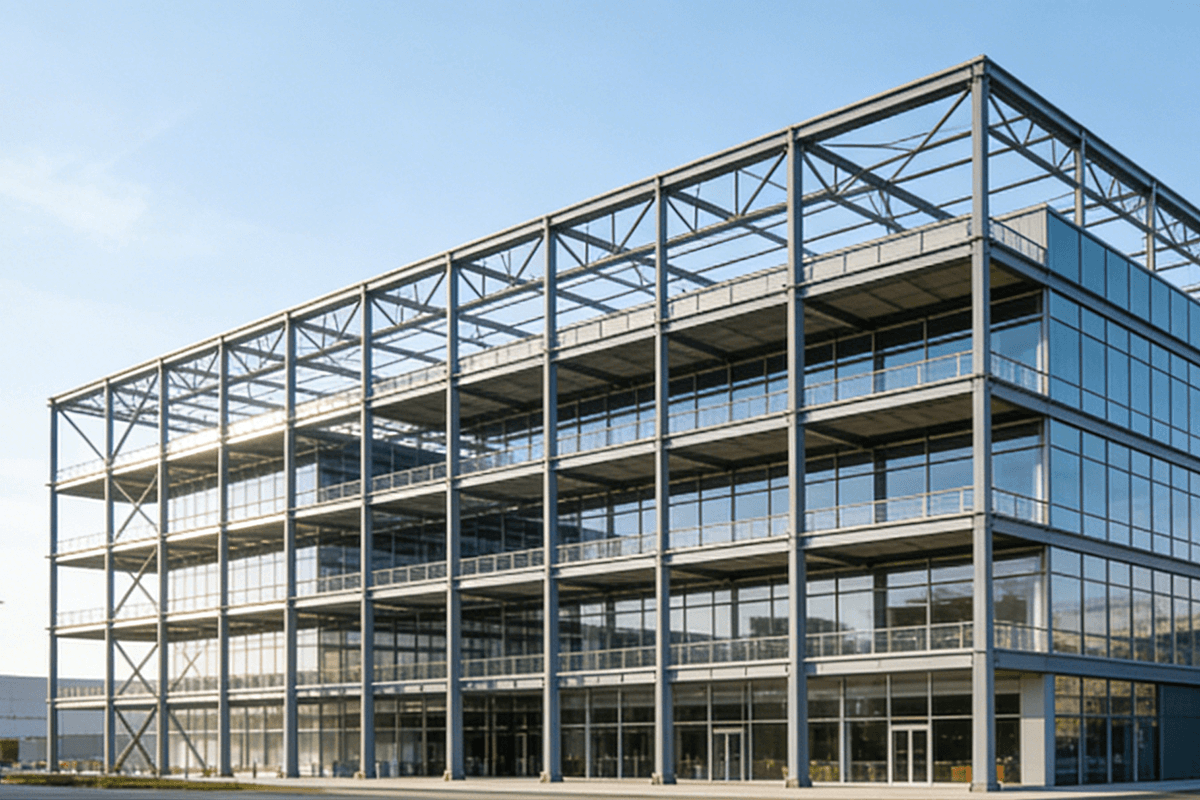
We’re not a steel vendor. We’re a steel structure partner—from concept validation and code-mapped design support, through precision fabrication and logistics coordination, to on-site QA/QC oversight and lifecycle documentation. Our nine subsidiaries include dedicated BIM modeling, corrosion engineering, and U.S. regulatory liaison teams—all operating under one integrated quality system. And yes—we’ve delivered airport-adjacent structures in Florida (Category 5 hurricane zone), Colorado (snow load 120 psf), and Oregon (Seismic Design Category D)—all with zero structural non-conformance reports upon final inspection.
Let’s begin where your project actually is—not where you wish it were
If your terminal is still in early planning, send us your site location, approximate footprint, and any known constraints (e.g., crane access, soil report, or FAA height restrictions). We’ll respond within 5 business days with a no-cost, 12-page Technical Feasibility Brief—including recommended structural typology, U.S. code alignment summary, and phased engagement roadmap. No sales pitch. Just engineering clarity.