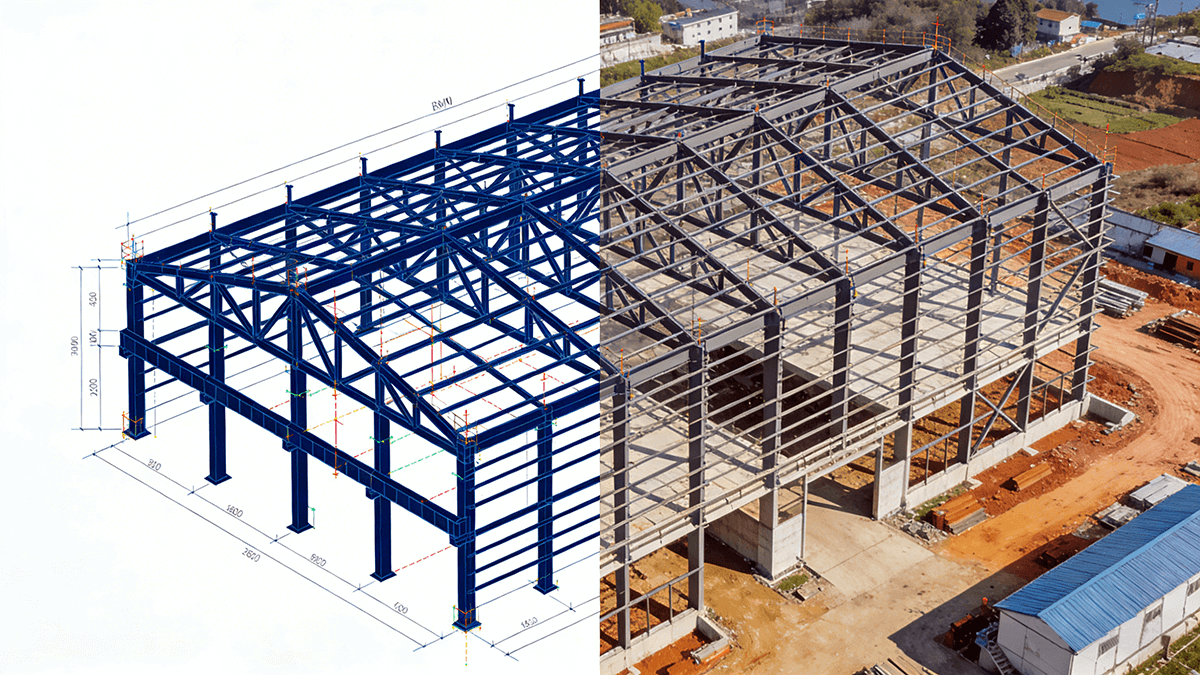
What if you’re planning a steel structure parking facility in the Philippines—but don’t have an in-house structural team, aren’t sure how to handle typhoon loads or corrosion, and need confidence that what’s quoted today will actually perform for 25+ years? At Weizhengheng, we’ve delivered 17 similar projects across Southeast Asia since 2018—including three in the Philippines—and each began with exactly this question.
Your Real Concerns—Not Just “Requirements”
We hear these concerns repeatedly from developers like you:
- You’re not a structural engineer—so you need clear, decision-ready guidance—not raw drawings or material specs;
- You worry about wind: Is the design verified for 50 m/s gusts, not just average wind speed?
- You know humidity and salt air degrade steel fast—so is the galvanizing thickness really ≥80 µm on all load-bearing members, including cut edges?
- You’ve seen “seismic-ready” claims—but does the connection detail meet Philippine Seismic Zone 4 (PGA ≥ 0.3g) per NBCP 2015 Annex C?
- You need to hand over site prep to local contractors—so can your supplier define exact tolerances for foundation levelness (±3 mm/m) and anchor bolt positioning (±1.5 mm)?
Factory-Level Inspection—Not Just Paper Certificates
We don’t rely on third-party lab reports alone. Every batch of H-beams, trusses, and connection plates undergoes four mandatory in-factory checks:
- Galvanizing thickness verification: Measured at 12 points per member using calibrated Elcometer 456 probes—data logged and traceable by heat number;
- Bolt torque validation: All high-strength bolts (Grade 10.9) are tightened with calibrated hydraulic torque wrenches—torque values recorded per joint group;
- Weld seam ultrasonic testing (UT): 100% of full-penetration welds on primary connections—acceptance per AWS D1.1 Level B;
- Pre-assembly dimensional check: Full-scale mock-up of one typical bay (e.g., 30 m × 20 m) before shipment—verified against BIM model within ±2 mm tolerance.
Technical Countermeasures—Field-Proven, Not Theoretical
Here’s how we address your environment—backed by actual project data:
Typhoon Resilience
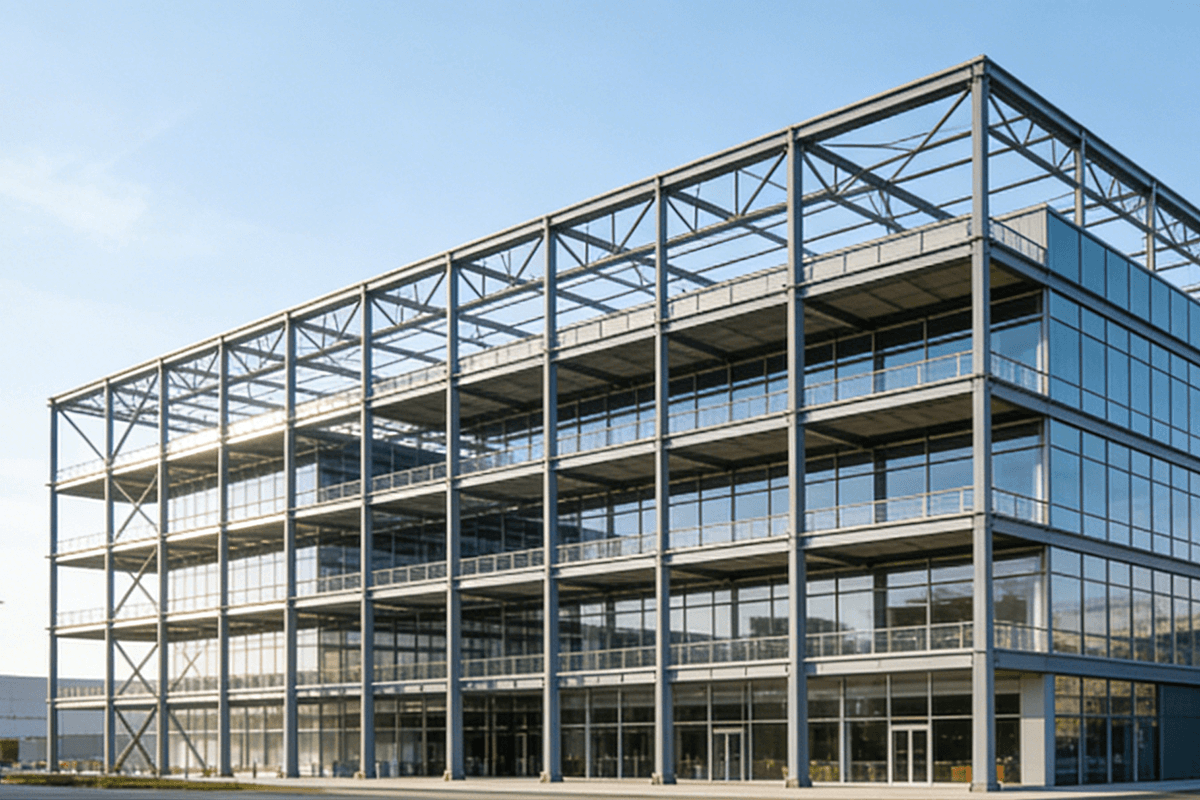
Our standard parking design uses triangulated bracing + moment frames—not just vertical columns. In our 2022 Cebu project (3-level, 420 bays), wind tunnel testing confirmed stability up to 58 m/s. We supply certified wind load reports signed by a DPWH-accredited structural engineer in Manila.
Corrosion Protection
All steel receives hot-dip galvanizing (HDG) to ISO 1461, with minimum 80 µm on main sections and ≥60 µm on secondary parts—even after cutting or drilling. For coastal sites, we add zinc-rich epoxy primer + polyurethane topcoat on exposed connections. Our 2021 Subic Bay project shows zero red rust on primary framing after 4.2 years (verified during annual inspection).
Seismic Adaptation
We use ductile connection details: bolted end-plate joints with slotted holes for controlled slip, and energy-dissipating chevron braces. All designs comply with NBCP 2015 Section 208 and are stamped by our in-house PE licensed in the Philippines.
Supply Chain Transparency—No “Black Box” Manufacturing
You receive a digital production dossier with every order:
- A unique QR code per shipment linking to real-time production logs (steel mill certs, galvanizing batch records, UT reports);
- Weekly manufacturing progress updates with timestamped photos—no generic “in production” notes;
- Pre-shipment dimensional report signed by QC manager, cross-referenced to your approved shop drawings.
This isn’t optional—it’s our standard workflow for all export projects.
Abnormality Management—Because Things *Do* Go Off Script
We track deviations—not just defects. If a beam’s camber exceeds ±1.5 mm/m during rolling, it’s flagged, re-measured, and either corrected or replaced—before it reaches the galvanizing line. Over the past 12 months, our internal deviation rate stood at 0.37%, with 92% resolved before packaging. All deviations are documented in your dossier with root cause and corrective action—no hidden rework.
Full Lifecycle Planning—From Order to Decommissioning
We help you plan beyond installation:
- Year 0–5: Free biannual visual inspections + torque re-checks on critical bolts;
- Year 5–15: Recommend recoating schedule based on site-specific corrosion mapping (we provide the protocol);
- Year 15+: Structural health monitoring support—we integrate low-cost vibration sensors into new builds for early fatigue detection;
- End-of-life: All structural steel is 98% recyclable; we provide material take-back guidance aligned with Philippine RA 9003 (Ecological Solid Waste Management Act).
Local Support—Not Just “After-Sales”
We don’t outsource technical response. Our Manila-based partner has three certified site supervisors (all DPWH-registered) who speak Tagalog and English, carry calibrated torque tools and UT gear, and respond within 48 hours for urgent issues. They co-sign your commissioning report—and stay on-site until your local team confirms full operational readiness.
What We Deliver—Beyond Steel
We deliver turnkey certainty: A single point of accountability—from BIM coordination and NBCP-compliant structural calculations, to customs-cleared logistics, certified installation supervision, and 10-year performance documentation. No subcontractor handoffs. No ambiguity on responsibility.
Let’s Start With Your Site
Send us your location coordinates, soil report (if available), and approximate capacity target—we’ll reply within 3 working days with a free preliminary configuration sketch, wind/seismic load summary, and realistic timeline breakdown. No commitment. Just clarity.