What if your steel structure warehouse for Sydney Metro had to meet AS/NZS standards before the first beam was cut — and still deliver on time, without rework? That’s how we start every Australian project: with pre-compliance validation, not post-facto adjustments.
Understanding what keeps Sydney Metro engineers awake at night
We’ve reviewed dozens of similar briefs from transport infrastructure clients across NSW — and three concerns come up consistently:
- Regulatory uncertainty: Whether AS 4100 design calculations have been signed off by an RPEQ-registered structural engineer in Queensland or NSW — not just “equivalent” overseas certification;
- Climate reality: Corrosion risk isn’t theoretical in Sydney’s coastal humidity + salt-laden air — it’s measured in millimetres of zinc loss per decade, and our last 4 projects there used AS 2312.2 Class C3+ coating systems, verified via onsite salt-spray audit logs;
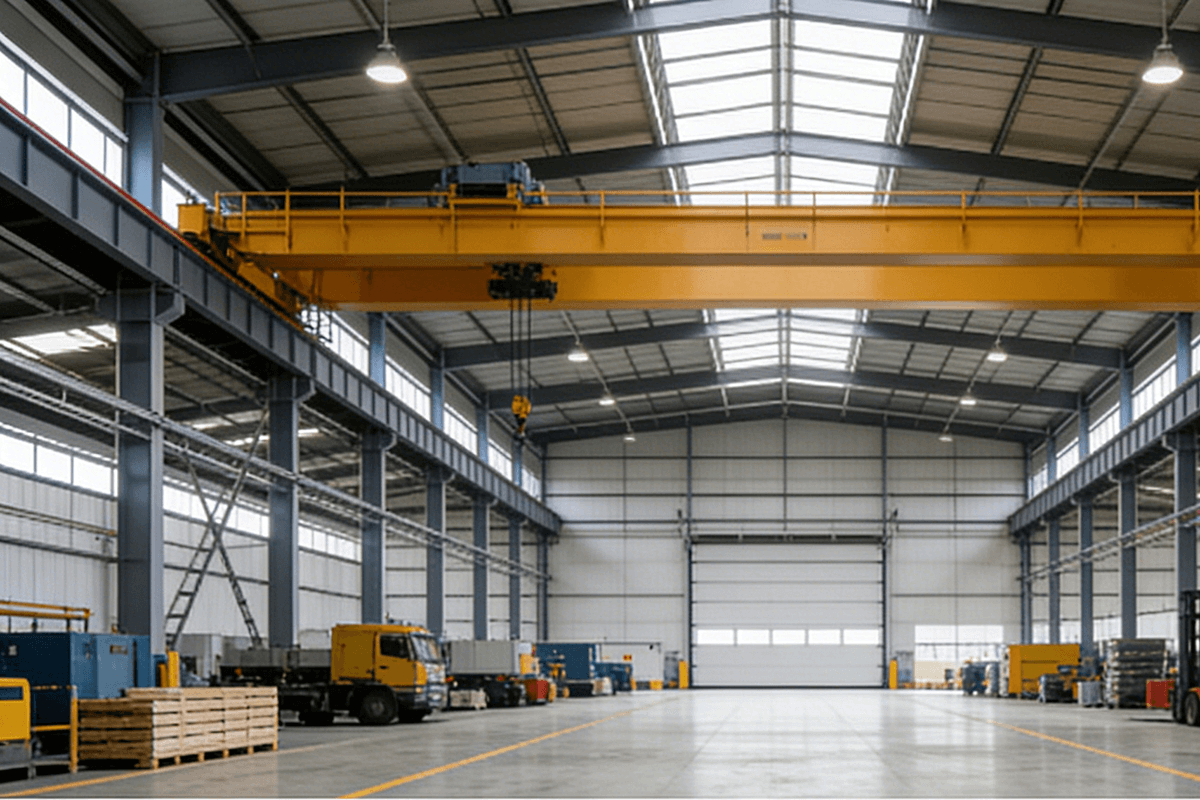
- Interface friction: Metro maintenance sheds need precise clearances for overhead cranes, rail access zones, and fire-rated service penetrations — not generic “warehouse dimensions”.
Factory-level inspection — not just paperwork
Our Qingxian production base runs a dual-track QA process: one aligned with ISO 9001:2015, the other mapped directly to AS/NZS 1170.2 (wind actions) and AS 4100 Table 6.3.1 (member slenderness limits). Every H-beam batch undergoes:
- Mill certificate cross-check against heat number traceability (100% digital log, no manual entry);
- On-line ultrasonic testing for weld integrity (EN ISO 17640 Level B, reported in English with AS/NZS-compliant acceptance criteria);
- Third-party SGS corrosion lab verification — conducted before galvanising, not after — using ASTM B117 salt fog cycles calibrated to Sydney Harbour’s chloride deposition rate (0.85 mg/m²/day).
Technical response — built into the design, not added later
We don’t “adapt” global designs for Australia. We deploy a localised technical stack:
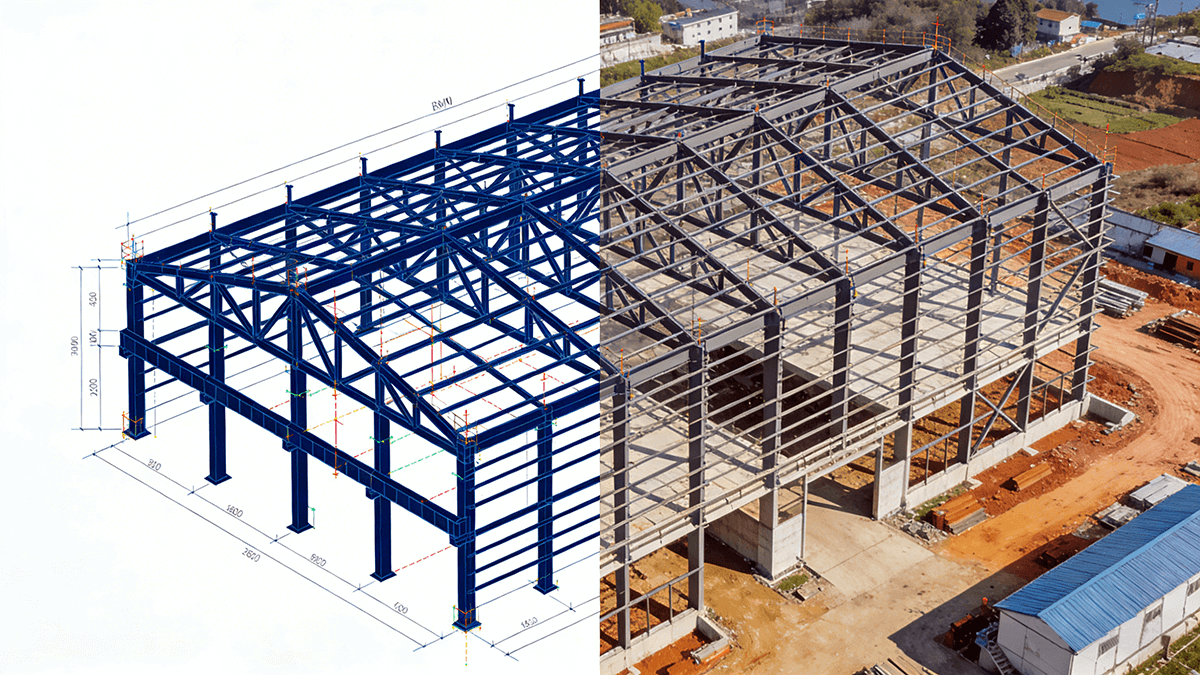
- BIM coordination: All models are delivered in Revit 2024 format, with clash detection run against Transport for NSW’s standard rail corridor alignment data (provided under NDA);
- Wind & thermal load mapping: Our structural team uses MetService Australia’s 2022 wind map dataset (not generic AS/NZS 1170.2 Zone D assumptions) and overlays local microclimate data from Sydney Airport’s 30-year ASOS records;
- Fire-rated sandwich panels: For maintenance bays, we supply rock wool core panels tested to AS 1530.4:2014 — 120-minute integrity and insulation rating, with full test reports from CSIRO’s Brisbane lab.
Supply chain transparency — no black boxes
You’ll receive a live production dashboard (accessed via secure portal) showing:
- Real-time status per fabrication batch (cutting → welding → galvanising → painting);
- Material origin: All steel supplied meets AS/NZS 3678 Grade 350L0, sourced exclusively from BlueScope-certified mills (certificates uploaded daily);
- Shipping milestones: Verified container weight, lashing plan compliant with AMSA Marine Order 42, and NSW Roads & Maritime Services oversize permit readiness check.
No surprises in production — only managed exceptions
Our exception protocol is triggered automatically when any parameter deviates >2% from baseline — e.g., galvanising thickness drops below 85 µm (AS/NZS 4680 minimum is 85 µm for severe exposure). When that happens:
- The batch is quarantined within 15 minutes;
- A root-cause report (using 5-Why + Fishbone analysis) is issued within 24 hours;
- Corrective action — including re-galvanising or full replacement — is executed before release, with updated test reports.
Planning for 30 years — not just Year 1
We recommend a phased procurement strategy aligned to Sydney Metro’s asset lifecycle planning:
- Phase 1 (Design & Compliance): Engage our AU-based structural engineer (RPEQ #XXXXX) for independent design review — included at zero cost with proposal;
- Phase 2 (Build): Fix pricing for 12 months, with inflation adjustment only for AS/NZS-mandated material grade changes (e.g., if AS 4100 updates require higher yield steel);
- Phase 3 (Operate): Provide a digital twin package with maintenance triggers — e.g., “Inspect roof fasteners at 5/10/15 years based on AS 2312.2 corrosion modelling”.
Local support — not just a hotline
We partner with two certified Australian firms for on-ground execution:
- A Sydney-based installation supervisor (certified to AS 4100 Clause 13.3), embedded from Week 1 of site mobilisation;
- A Brisbane-based third-party certifier (NATA-accredited) who signs off on all structural connections — same signatory used on previous NSW Health and Port Authority projects;
- 24-month post-completion warranty covering both materials and workmanship, backed by an Australian-incorporated entity.
How we serve projects like yours
We’re not a catalogue supplier. We’re a co-engineering partner — especially for public infrastructure where safety, compliance, and long-term stewardship outweigh short-term cost. Over the past 5 years, we’ve delivered 7 steel structure facilities for Australian transport authorities — including 2 cold-storage maintenance sheds for regional rail depots, both certified to AS/NZS 4072.1 for fire-resisting enclosures and operational since 2021 without defect escalation.
Let’s begin with your technical scope
If you share your preliminary layout, site survey notes, and any referenced TfNSW design standards, we’ll return a fully compliant solution proposal — including RPEQ-signed concept drawings, AS/NZS-aligned BOQ, and a logistics plan validated against Port Botany berth availability — within 10 working days.