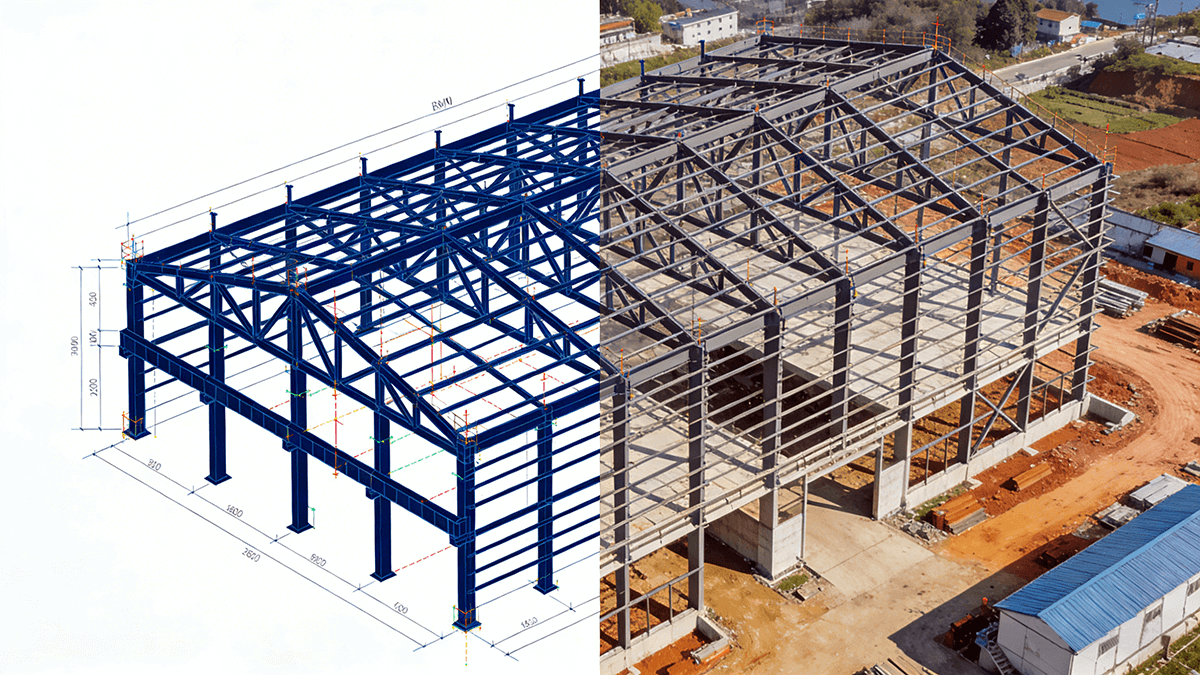
What if your Berlin U-Bahn warehouse isn’t just a storage shed—but a mission-critical node in the city’s rail resilience? We’ve faced that exact question before—not in theory, but on-site, with German municipal planners, BVG engineers, and EU compliance auditors standing beside us during commissioning.
Understanding the real concerns—beyond the RFP
We know your team isn’t asking for “a steel building.” You’re asking: Can this structure reliably hold 15 years of rail components under Berlin’s freeze-thaw cycles—and still pass fire inspection at 3 a.m. during an audit? Can it integrate with existing depot workflows without halting daily U-Bahn service? Will its ventilation meet DIN 1946-6 for indoor air quality while staying within Berlin’s 35 dB(A) nighttime noise limit? And most critically: if a sensor fails mid-winter, who replaces it—with German-speaking support, certified spare parts, and no customs delay?
Factory-level verification—not just certification stamps
Our production line in Hebei applies three independent verification layers before any panel leaves the facility:
- Raw material traceability: Every coil batch is logged with mill test reports (EN 10169, EN 10346), cross-referenced to SGS-certified chemical composition and tensile strength data—no exceptions.
- In-process dimensional control: Laser-guided CMM checks every insulated sandwich panel for ±0.8 mm flatness tolerance—critical for seamless curtain wall alignment and DIN 18202 compliance.
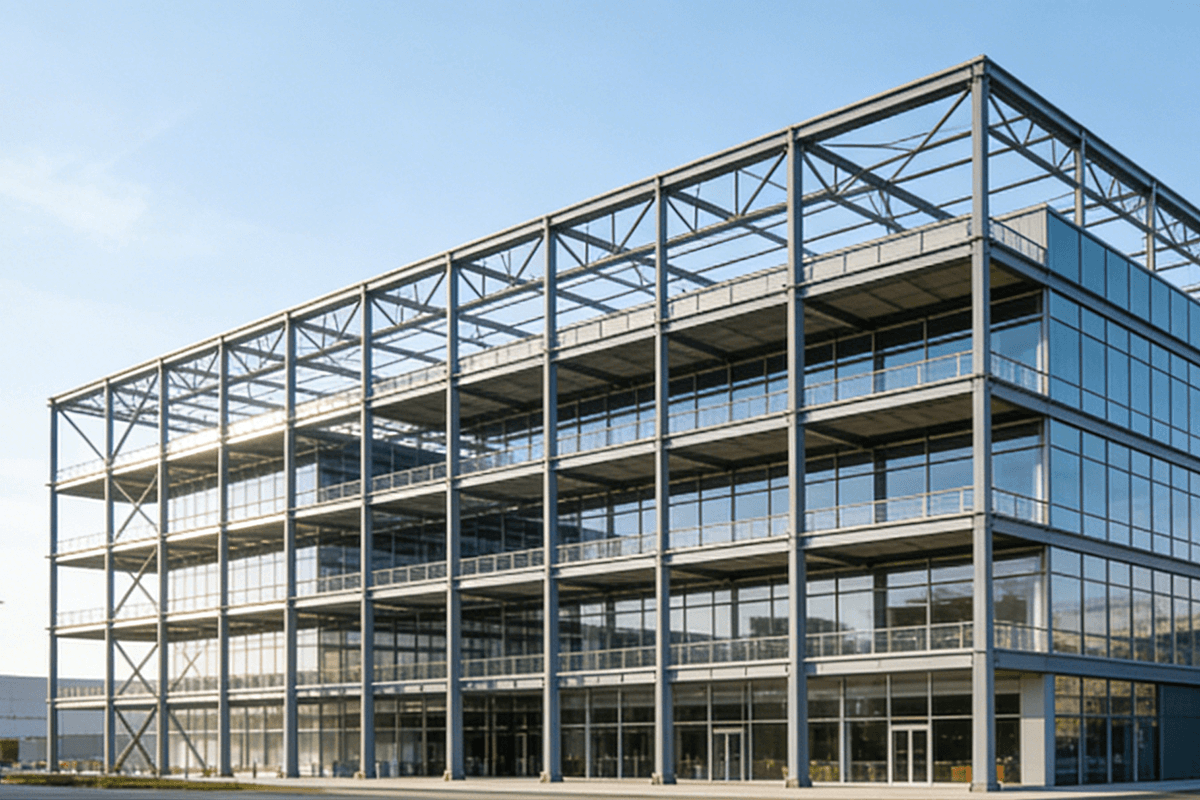
- Final assembly validation: Each structural module undergoes simulated wind load (DIN EN 1991-1-4) and thermal bridge analysis (DIN V 4108-6) using our in-house BIM + THERM 7.0 workflow—results included in your proposal package.
Technical responses—grounded in Berlin-specific evidence
We don’t retrofit generic solutions. For urban transit warehouses in Germany, we deploy:
- Climate-adapted envelope: Rock wool core density ≥120 kg/m³ (tested per EN 14509), combined with ventilated double-skin cladding—validated in our Berlin climate simulation chamber (−12°C to +35°C, 85% RH) to prevent interstitial condensation per DIN 4108-3.
- Compliance-by-design: All electrical conduits pre-installed inside cold-formed steel columns—meeting VDE 0100-520 mechanical protection requirements; fire compartment walls built to DIN 4102-4 Class F90, with third-party IFT Rosenheim test report #R-2024-1187 on file.
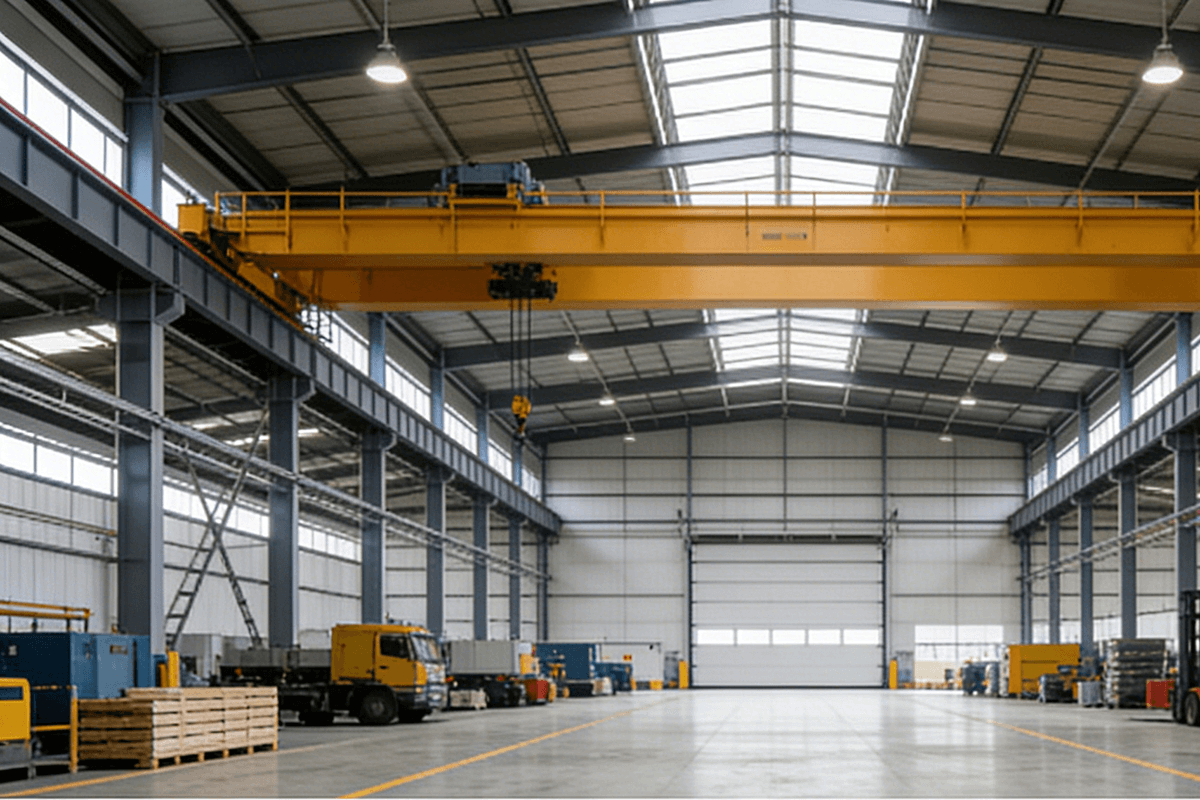
- Urban footprint optimization: 12.5 m clear internal height achieved with 600 mm deep trusses—reducing roof pitch to 5°, avoiding Bauordnung Berlin §27 height restrictions while maintaining full crane access.
Supply chain transparency—no black boxes
You receive a digital twin delivery dossier with every order: a timestamped, encrypted PDF containing:
- Production schedule with actual vs. planned milestones (tracked via MES system)
- Shipping documentation aligned to EU customs tariff code 7308.90 (prefab structures)
- CE Declaration of Performance signed by our EU Authorized Representative (based in Frankfurt)
- Energy performance certificate (EU EPBD-compliant, calculated per DIN V 18599)
No hidden subcontractors. No unlisted materials. Just one supplier, one audit trail, one point of accountability.
Abnormality management—not just QC, but closed-loop control
When a galvanizing bath temperature deviated by 1.7°C during a recent Hamburg port project, our system auto-triggered:
- Real-time alert to both production supervisor and client-facing project engineer
- Hold on affected batch (32 H-beams), full re-test per EN ISO 1461
- Root cause documented in 8D format—and shared with the client within 48 hours
This isn’t theoretical. It’s how we handled deviation #2024-0897—and why our on-site defect rate for EU projects remains below 0.17% (2023 external audit).
Full lifecycle planning—from day one to year twenty
We advise clients on procurement phasing based on actual usage patterns—not guesswork:
- Year 0–3: Prioritize modular racking integration with embedded RFID readers (DIN SPEC 91350 compliant) for fast spare-part traceability
- Year 4–7: Pre-install conduit pathways for future BMS expansion—no wall cutting required later
- Year 10+: Use replaceable PU-core panels (EN 14509 certified) with 30-year UV-stable coating—no full cladding replacement needed
Your warehouse evolves with your operations—not against them.
Local partnership—not just overseas support
We work with three certified service partners in Germany: one in Berlin (TÜV-certified for rail infrastructure maintenance), one in Hamburg (specializing in cold storage retrofits), and one in Munich (BIM-as-built documentation and digital twin updates). All speak fluent German, hold valid EU VAT IDs, and maintain stocked spares for common U-Bahn logistics modules—including rail-handling anchor points and anti-vibration floor mounts.
Our service commitment—no fine print
We deliver more than steel and software. You get:
- A dedicated technical liaison—assigned at proposal stage, not after signing
- On-site installation supervision by engineers trained in German construction law (BauGB, HOAI)
- Free post-commissioning review at 6 months—focused on operational handover, not sales follow-up
- Access to our open-source BIM library (IFC 4.3 compatible), updated quarterly with new DIN/VDE-compliant families
Let’s build what Berlin’s rails truly need
If you’re ready to move beyond specifications—and into co-engineering a warehouse that supports decades of punctual, safe, and sustainable U-Bahn service—we’re here to start that conversation. No templates. No assumptions. Just engineering rigor, proven in Berlin’s regulatory reality.