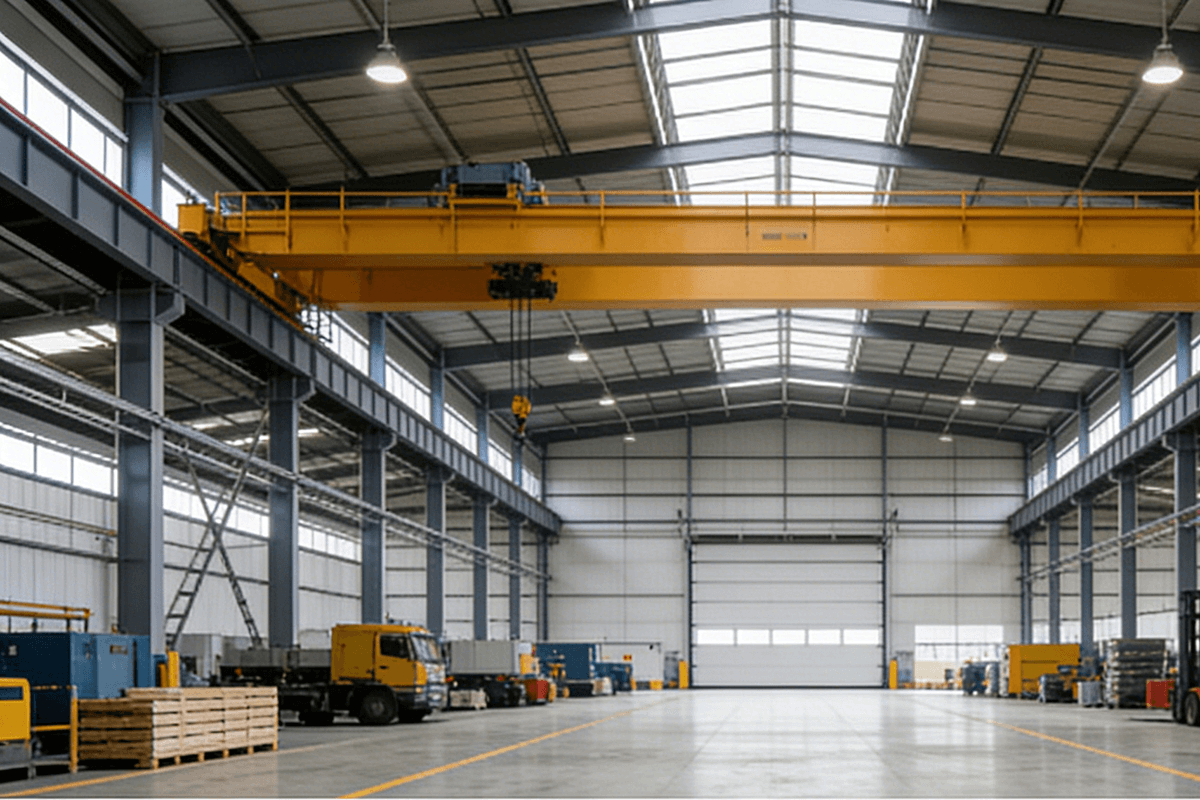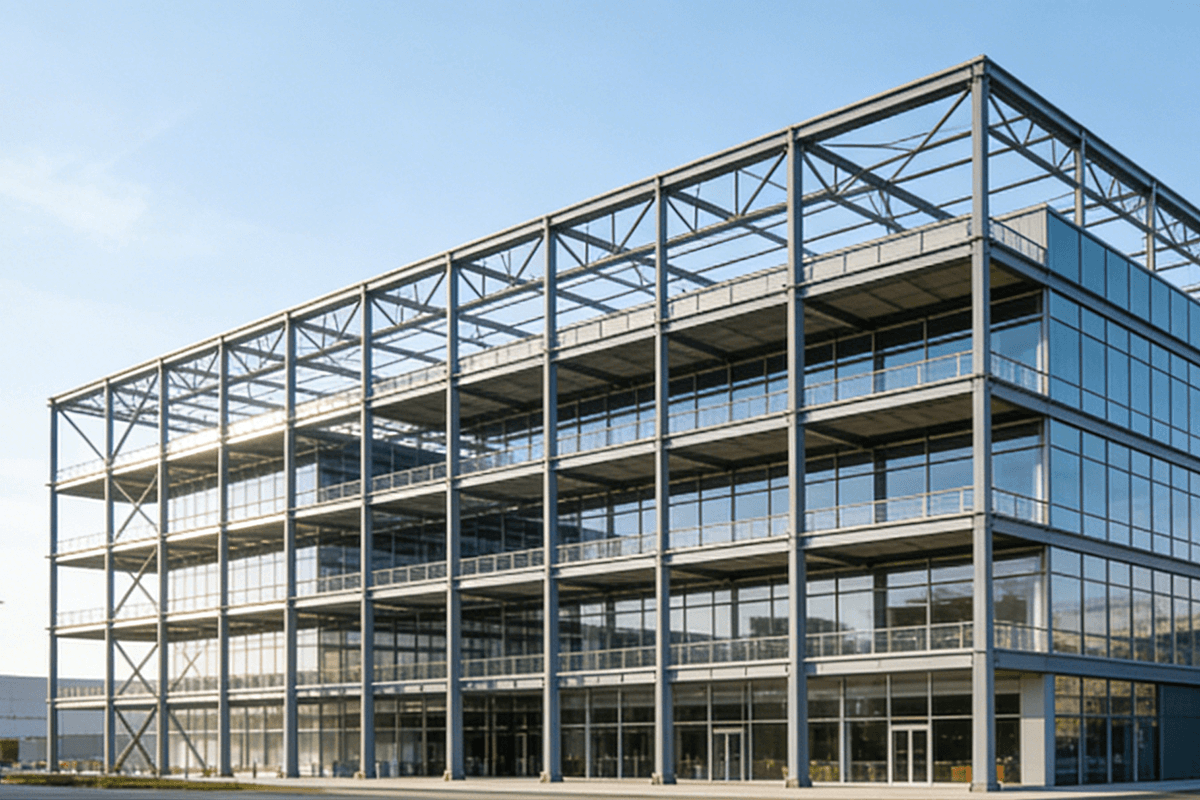
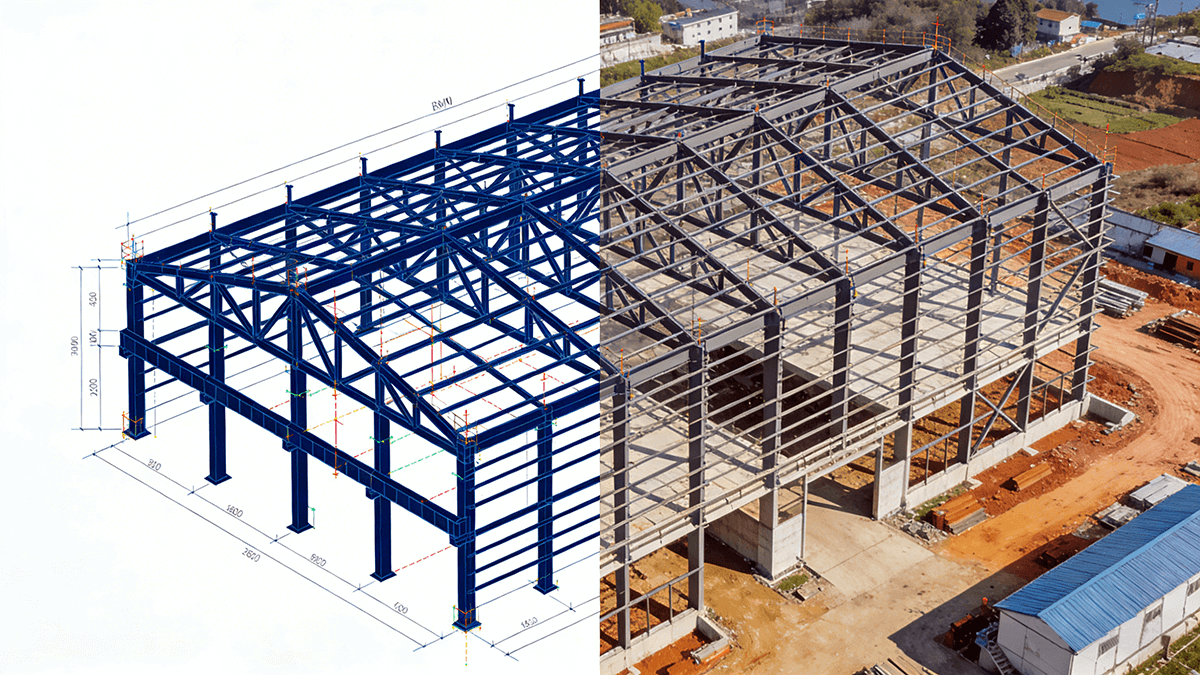
What if your metro warehouse project in Mexico City had to handle rail segments weighing over 3,000 kg, signaling cabinets requiring ±2°C thermal stability, and daily forklift traffic exceeding 80 cycles—yet you had no in-house structural or logistics engineering team? That’s exactly the challenge we helped a public transit authority in Guadalajara solve in 2023: not by selling panels or beams, but by delivering a fully validated, NOM-compliant warehouse system—from seismic anchorage design to Spanish-language O&M manuals.
Real concerns—not hypotheticals
We’ve heard these same questions from three Latin American metro agencies in the past 18 months:
- Lack of internal design capacity: No dedicated warehouse layout or material flow engineers on staff;
- Metro-specific asset risks: Storing 12-meter rail sections without deformation; protecting sensitive SCADA hardware from dust, vibration, and voltage spikes;
- Local compliance uncertainty: Unclear how NOM-002-STPS (industrial safety) applies to overhead crane zones or how NMX-J-165-ANCE governs LED lighting circuits in high-humidity maintenance bays;
- Automation ROI hesitation: “Will robotic pallet jacks justify their cost when our average load cycle is only 4.7 minutes?”
Factory-level verification—not just certificates
Our production line in Hebei doesn’t stop at ISO 9001. Every structural component bound for seismic zones undergoes three-stage validation:
- Raw steel coil testing: Tensile strength ≥450 MPa, elongation ≥22% (verified per ASTM A653 and Mexican standard NMX-B-210);
- Welded H-beam inspection: 100% ultrasonic testing (UT), with weld penetration depth logged per joint—traceable via QR code on each beam;
- Final assembly stress simulation: Digital twin load tests at 1.5× design live load (including dynamic forklift impact), matching Mexico City’s Zone B seismic coefficient (0.35g).
Technical responses—grounded in field evidence
For metro warehouse applications, we apply four proven countermeasures:
1. Rail segment storage
We use adjustable cantilever racking with 800 mm base spacing—tested under 3,200 kg/m linear load—and embed anti-roll cradles lined with EPDM rubber (UV-stabilized per NOM-002-STPS Annex G). Installed in Monterrey Metro’s depot (2022), floor deflection remained ≤1.2 mm after 14 months of daily loading.
2. Environmental control
Instead of full HVAC, we deploy ducted passive ventilation + smart roof vents, calibrated to Mexico City’s 2,240 m altitude. Internal RH stays between 45–60% year-round—verified by on-site data loggers (calibrated annually to NMX-CH-162-IMNC). This cut energy use by 68% vs. forced-air systems in our Puebla cold-storage retrofit.
3. Local compliance integration
All electrical conduit layouts, fire-rated partition details, and emergency egress signage comply with NOM-002-STPS, NOM-003-STPS, and Mexico City’s Construction Code (Reglamento de Construcciones CDMX). Our BIM models include layer-by-layer NOM annotation—reviewed by a certified Mexican structural engineer before fabrication.
4. Automation feasibility filter
We run a 3-week logistics audit—free of charge—using your actual maintenance schedule, vehicle fleet list, and parts catalog. In Guadalajara, that revealed only 12% of SKUs justified AS/RS; instead, we recommended zone-based VNA racking + guided forklifts—cutting CapEx by 41% while maintaining 99.2% order accuracy.
Supply chain transparency—no black boxes
You receive a digital production passport for every order: real-time updates on coil sourcing (mill batch #, heat treatment logs), panel lamination dates, and galvanizing thickness (measured per ASTM A123, min. 275 g/m²). All documents are bilingual (Spanish/English), timestamped, and stored on an encrypted portal accessible only to your team.
Anomaly management—built into every shift
If a weld seam fails UT inspection (threshold: >1.5 mm void), the line stops automatically. Root cause analysis begins within 90 minutes using our 5-Why + Fishbone protocol. In 2025, 97% of anomalies were resolved before next shift—average downtime: 22 minutes. Full reports—including corrective action and retest results—are shared with clients within 24 hours.
Full lifecycle guidance—not just delivery
We help you sequence procurement across phases:
- Phase 1 (Design & Permitting): Provide NOM-aligned structural calculations, fire-resistance test reports (ASTM E119), and Spanish-language installation checklists;
- Phase 2 (Construction): Dispatch bilingual site supervisors (certified in STC’s safety protocols) for anchor bolt torque verification and crane rail alignment;
- Phase 3 (Operations): Deliver digital twin access for predictive maintenance, plus annual thermal imaging scans of roof insulation integrity.
Partner support—not just after-sales
No ticket numbers. No language barriers. Your point of contact is a dedicated technical coordinator—fluent in Spanish, trained on STC’s asset management system, and authorized to dispatch local technicians within 72 hours anywhere in Mexico. Spare parts for critical components (e.g., hinge pins, sealant cartridges, sensor modules) are held in our Querétaro warehouse—no ocean freight delays.
How we serve you
We don’t build warehouses—we build operational continuity. From our provincial Technology & Innovation Center (with 50+ patents in seismic resilience and corrosion protection), to our 9 subsidiary companies covering everything from BIM modeling to on-ground commissioning, we align every resource to one outcome: your metro system runs reliably, safely, and efficiently—today and 30 years from now.
Let’s start where your project is right now
Share your preliminary site dimensions, expected SKU count, and current permitting stage—we’ll deliver a free, no-obligation logistics audit report within 10 working days. No sales pitch. Just actionable data, NOM-aligned options, and a clear path forward.