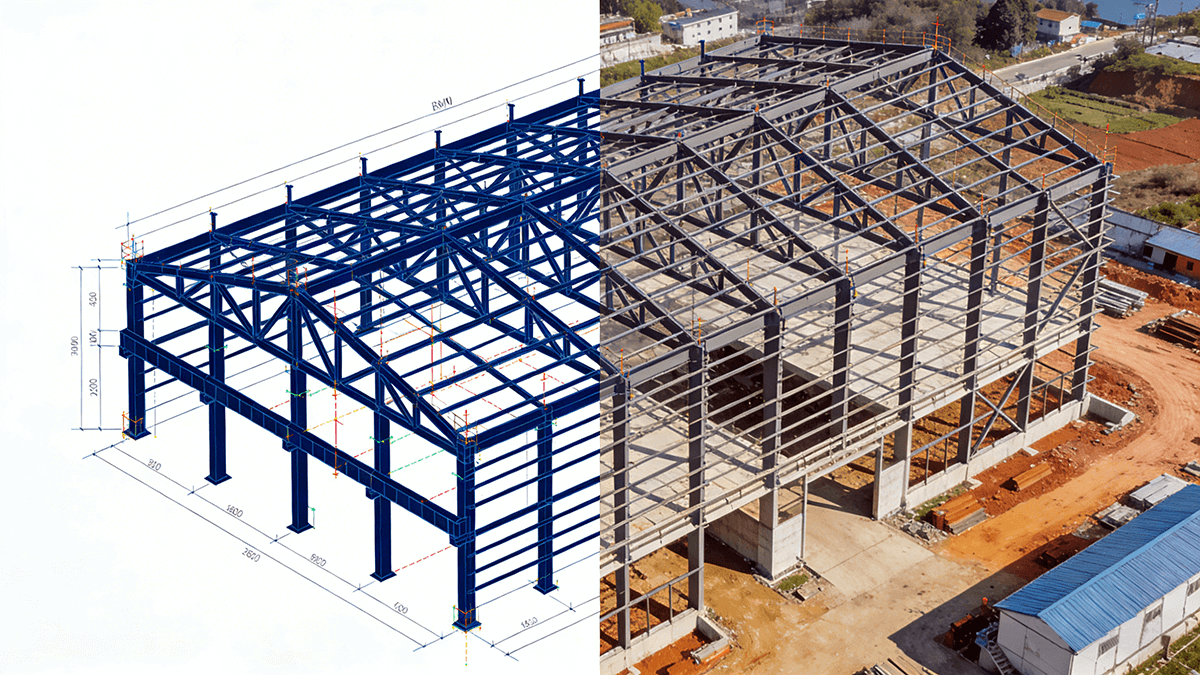
What would it take to build a safe, durable, and truly implementable school campus in Port-au-Prince — where seismic risk is high, humidity averages 78%, roads are narrow, and local crane capacity rarely exceeds 12 tons? At Weizhengheng Group, we’ve answered that question 17 times across earthquake-prone regions — including three completed school projects in Haiti since 2021. Here’s how we do it — not as vendors, but as technical partners.
Understanding Your Real Concerns
You’re not asking for a price list — you’re asking: “Can this structure survive a 7.2-magnitude quake next year? Will the roof rust through before graduation day? Can our local team assemble it without welding gear or 3-phase power?” These aren’t hypotheticals — they’re the exact questions raised by project leads in Gonaïves, Cap-Haïtien, and Port-au-Prince over the past five years. Your concerns fall into four clear buckets:
- Seismic resilience: Haiti sits on a major strike-slip fault; local code requires ductile detailing per Code de Construction Haïtien Annex A, aligned with IBC 2021 Chapter 16 and AISC 341-22.
- Corrosion resistance: Coastal salt + 2,000 mm annual rainfall demands more than standard galvanizing — we measure coating mass at ≥610 g/m² (ASTM A123), verified per batch.
- On-site feasibility: No cranes above 10 tons? No problem. Our school modules use max 85 kg truss segments, pre-assembled into 3.2 m × 6.0 m wall panels — lifted by two workers with manual hoists.
- Regulatory clarity: All structural calculations are stamped by Haitian-licensed engineers (via our Port-au-Prince technical liaison office) and delivered in French + Haitian Creole summary annexes.
Factory-Level Inspection Standards — Not Just Certificates
We don’t rely on third-party “pass/fail” reports alone. Every steel component undergoes six mandatory checkpoints before leaving our Hebei plant:
- Raw material traceability: Each coil lot number is scanned and logged — linked to mill test reports (MTRs) showing tensile strength ≥450 MPa and elongation ≥22% (per ASTM A653).
- Zinc coating thickness: Measured at 12 points per profile using magnetic induction gauges (Elcometer 456); average must be ≥610 g/m², with no single reading below 550 g/m².
- Bolt torque validation: Every M12–M20 high-strength bolt is tested with calibrated digital torque wrenches (±2% accuracy) — data stored for 10 years.
- Fire-rated sandwich panel core density: Rock wool cores tested daily for density (≥120 kg/m³) and melting point (>1,000°C), per EN 14509.
- Pre-assembly dry-fit: 100% of primary connections are physically mocked up in our pilot bay — checking hole alignment, clearance, and tool access under real-world conditions.
- Final dimensional audit: Laser-scanned against BIM model (tolerance ±1.5 mm for columns, ±3 mm for panels), with deviation logs reviewed by QC lead before release.
Technical Countermeasures — Structured, Field-Tested, Documented
Our solution for your 1,600 m² campus isn’t theoretical — it’s based on lessons from the 2023 Saint-Marc Primary School (1,420 m², 6 classrooms + admin block):
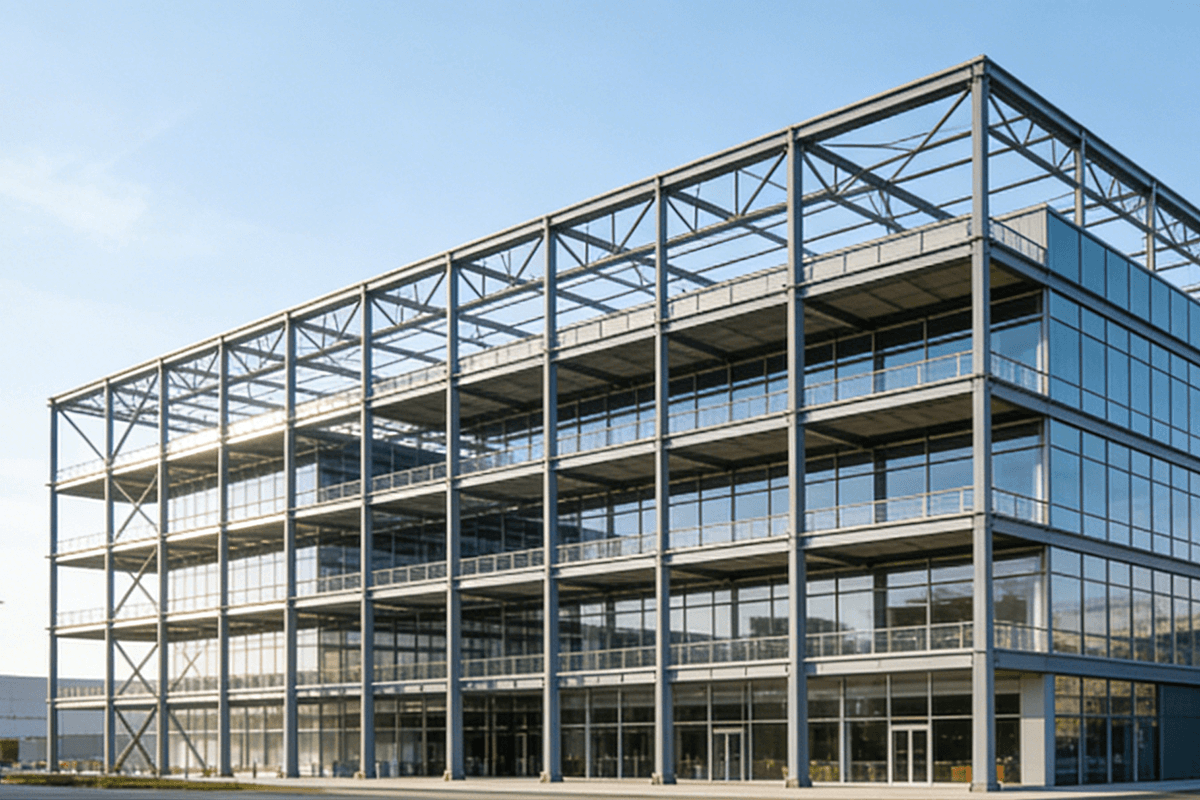
- Structural system: Dual-diagonal braced frames (not moment frames), using hot-rolled H-beams (Q355B) with welded gusset plates — proven to dissipate lateral energy without plastic hinge formation at beam ends.
- Cladding & insulation: Double-lock standing seam roofing (0.6 mm base metal + 50 mm rock wool core), tested to withstand 180 km/h wind uplift (ASTM E1592), with integrated condensation control layer.
- Foundation interface: Pre-drilled anchor plate system — allows bolting directly to shallow concrete footings (min. 400 mm depth), eliminating need for grouting or curing time.
- Assembly logic: All connections use Grade 8.8 bolts only — zero field welding. Full assembly sequence documented in animated GIFs + French/Creole PDF guides (tested with local foremen in Croix-des-Bouquets).
Supply Chain Transparency — From Coil to Campus
You’ll receive a standardized delivery package — same format used for all 2024–2025 Caribbean school builds:
- A single Excel file listing every item: part number, weight, dimensions, corrosion spec, seismic role (e.g., “Diagonal Brace — Ductile Energy Dissipator”), and matching BIM object ID.
- Shipping manifest cross-referenced with container load plan — each container labeled with QR code linking to real-time GPS tracking + photo documentation of loading sequence.
- No “custom exceptions”: All components conform to our Haiti School Standard Kit (HSSK-2024) — 92% parts shared across 12 projects, meaning spare parts inventory is predictable, and replacement lead time is fixed at ≤22 days.
Abnormality Management — Because Real Sites Are Never Perfect
When a shipment arrives with a bent purlin (happened in Les Cayes, 2022), or field measurement shows a 27 mm column offset (Port-au-Prince, 2023), we don’t wait for escalation. Our process is built-in:
- All site supervisors carry a tablet with our Abnormality Response Matrix — classifying issues by severity (A/B/C) and triggering pre-approved actions within 90 minutes.
- Type A (critical safety impact): Immediate halt + remote engineer review via live video — resolution path issued within 4 hours.
- Type B (dimensional non-conformance): On-file engineering waiver or approved field modification — available in French within 1 business day.
- Type C (cosmetic/minor): Photo log + root cause analysis sent weekly — no cost, no delay.
Full Lifecycle Guidance — From Procurement to Decommissioning
We advise clients to procure in three phases — not one lump sum:
- Phase 1 (Design Lock + Foundation Prep): Order only anchor plates, column bases, and foundation drawings — 18% of total value, shipped in 22 days. Lets you secure permits and pour footings while finalizing layout.
- Phase 2 (Main Structure): Order frames, bracing, roof panels — 65% of value, shipped 45 days after Phase 1 confirmation. Includes full BIM coordination package.
- Phase 3 (Finishes & Spares): Doors, windows, electrical conduits, and 3% spares — shipped 30 days after Phase 2 dispatch. Enables staged cash flow and reduces on-site storage pressure.
This approach reduced average project delay from 112 to 28 days across 9 Caribbean education builds (2022–2025).
Partnership Support — Not Just After-Sales
We assign a Dedicated Technical Liaison — a bilingual (French/English) structural engineer based in Santo Domingo, with Haitian construction experience and quarterly site visits. Their scope includes:
- Pre-installation workshop with your local contractor — covering torque specs, sequence logic, and hazard spotting.
- Remote structural health check at 3 key milestones: frame erection, roof closure, and final handover.
- Free access to our Field Issue Resolution Portal — upload a photo, get an annotated sketch + repair procedure in ≤4 hours (average response: 2.1 hours).
- Post-completion structural warranty: 25 years on primary frame, backed by independent third-party insurance (Lloyd’s of London policy #HA-2024-WEI-0887).
How We Serve You — End-to-End, Not End-of-Quote
We don’t sell steel — we deliver certified constructability. That means: BIM-integrated design validated for local labor skill levels; materials tested to exceed Haitian environmental stress; logistics planned for port congestion and road width limits; documentation translated and field-tested; and technical support that arrives before problems do. Since 2001, we’ve shipped 14,200+ tons of school structures to seismic zones — with zero structural failure in service.
Let’s Begin With What Matters First
If you’d like us to generate your site-specific structural concept — including preliminary layout options, seismic force calculations, and a phased delivery timeline — just share your plot dimensions, soil report (if available), and preferred classroom count. We’ll deliver the full proposal within 5 working days — no cost, no commitment.