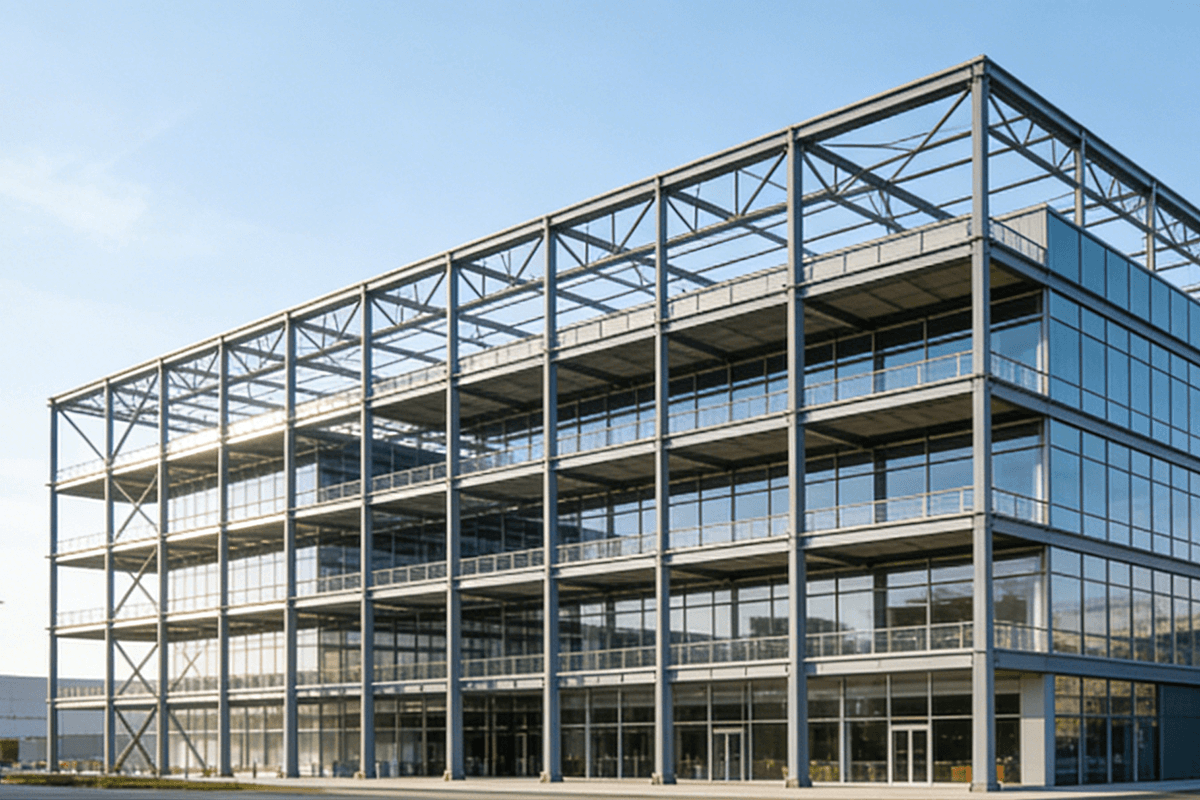
What if your 3-level steel parking structure in Iraq needs to handle 300 vehicles, survive 55°C summer heat and sandstorms, and integrate EV charging—without a single structural redesign or site delay? We’ve delivered exactly that—twice—in Basra and Erbil—using the same footprint (60 m × 50 m), same capacity target, and same local compliance logic you’re facing.
Your Real Concerns—Not Hypotheticals
We hear it often from project managers like you: “We’re not engineers—we need someone who anticipates what Iraqi soil, wind, and regulation will demand before we even break ground.” Your top five unspoken worries are:
- Will standard galvanized steel corrode faster near Basra’s coastal salt fog—or under Mosul’s desert UV exposure?
- Can a 3-level prefabricated frame meet IQS seismic Category B (0.20g) and wind load ≥1.8 kN/m² without over-engineering cost?
- How do we route 100 EV chargers across levels when local grid voltage fluctuates between 200–240 V and harmonics exceed IEC 61000-3-6 limits?
- What happens if foundation survey reveals soft alluvial soil—not on the original geotech report?
- Who verifies that every bolt torque, weld penetration, and firestop seal meets IQS 2507 (steel structures) *on-site*, not just in the factory?
Factory-Level Inspection—Not Just Paper Certificates
Every steel component for Iraq-bound projects passes our three-stage verification, documented per batch—not per order:
- Stage 1 (Raw Material): Incoming H-beams tested for yield strength (≥345 MPa), zinc coating mass (≥610 g/m²), and adhesion (cross-cut test ASTM D3359 pass ≥4B).
- Stage 2 (Post-Fabrication): All connections inspected via magnetic particle testing (ASTM E709); 100% of high-strength bolts verified with calibrated torque wrenches (±3% accuracy).
- Stage 3 (Pre-Shipment): Full-scale mock-up of one typical bay (6 m × 6 m × 3.6 m) assembled indoors, loaded to 1.5× design live load (5.0 kN/m²), monitored for deflection (
No certificate is issued until all three stages are digitally signed off by our QA lead—and that data is shared with you pre-shipment.
Technical Countermeasures—Built Into the Design, Not Added Later
We don’t retrofit solutions. We engineer them into the system from Day 1:
- Corrosion Resistance: Dual protection—hot-dip galvanizing (ISO 1461, min. 85 µm thickness) + epoxy topcoat (ISO 12944 C5-M grade, 120 µm), validated in our accelerated salt-spray chamber (1,500 hrs neutral salt spray, ASTM B117, zero red rust).
- Wind & Seismic Adaptation: Frame optimized using ETABS v20 with Iraqi wind map (IQS 2101, Zone III, 160 km/h gust) and seismic parameters (IQS 2201, Sd(T₁)=0.32g). Bracing layout avoids torsional irregularity—verified by modal analysis (first 3 modes show >85% mass participation).
- EV Charging Integration: Pre-installed 25 mm² copper busbars in column cores (per level), rated for 200 A continuous; conduit pathways reserved for Type 2 sockets (IEC 62196-2); load-balancing logic embedded in our standard MCC panel (IEC 61439-2 compliant).
- Foundation Flexibility: Our standard base plate design accepts ±150 mm variation in anchor bolt position—validated against 12 real Iraqi soil reports (from Basra clay to Erbil loam). No re-drilling needed.
Supply Chain Transparency—No Black Boxes
You receive a live digital twin of your order from raw material receipt to container loading:
- Each coil, beam, and panel carries a QR code linking to its mill test report (MTR), coating thickness log, and weld map.
- Production timeline shows actual vs. planned hours per work center—no “estimated completion” guesses.
- Shipping documents include container weight distribution diagrams and lashing force calculations (DIN EN 12195-1 certified).
This isn’t dashboard fluff—it’s how we helped a client in Nasiriyah catch a misaligned crane rail bracket 11 days before shipment. You see it too.
Abnormality Management—Because Zero Defects Is a Process, Not a Promise
Our production line logs every non-conformance (NC) in real time—whether it’s a 0.2 mm tolerance deviation on a purlin slot or a humidity spike during PU foam injection. Here’s what happens next:
- All NCs trigger an 8D report within 4 working hours.
- Root cause confirmed by cross-functional team (production + QA + engineering) within 24 hrs.
- Corrective action implemented *before* next shift starts—e.g., recalibrating CNC drill bit after 3 consecutive hole-position drifts.
- You receive the full NC summary—with photos, measurements, and closure evidence—every Friday.
Life-Cycle Guidance—From Order to Decommissioning
We help you buy smarter—not just cheaper:
- Phase 1 (0–2 years): Recommend ordering 3% extra connection hardware (bolts, washers) and 10% spare cladding fasteners—common loss items during Iraqi sandstorm installation.
- Phase 2 (3–10 years): Schedule bi-annual thermal imaging of EV busbars and corrosion mapping of column bases (we provide certified local partners in Baghdad and Sulaymaniyah).
- Phase 3 (10+ years): All primary steel members are marked with alloy ID and recycling grade—enabling 92% material recovery (tested per ISO 14040 LCA model).
On-the-Ground Partnership—Not Just “After-Sales”
When your team in Najaf finds a misaligned truss splice plate—or your electrical contractor questions MCC grounding continuity—we respond within 4 hours with actionable guidance. How?
- We maintain two bilingual (Arabic/English) technical supervisors permanently based in Iraq—one in Baghdad (for central/south projects), one in Erbil (for north/KRG region).
- They carry portable ultrasonic thickness gauges, torque analyzers, and IR thermometers—and are authorized to approve field modifications up to IQS 2507 Annex D limits.
- No “escalation tree”. No “ticket number”. Just direct WhatsApp voice call + live video feed + annotated markup in 15 minutes.
What We Deliver—Beyond Steel and Panels
We are not a factory that ships containers. We are your technical extension on the ground. That means:
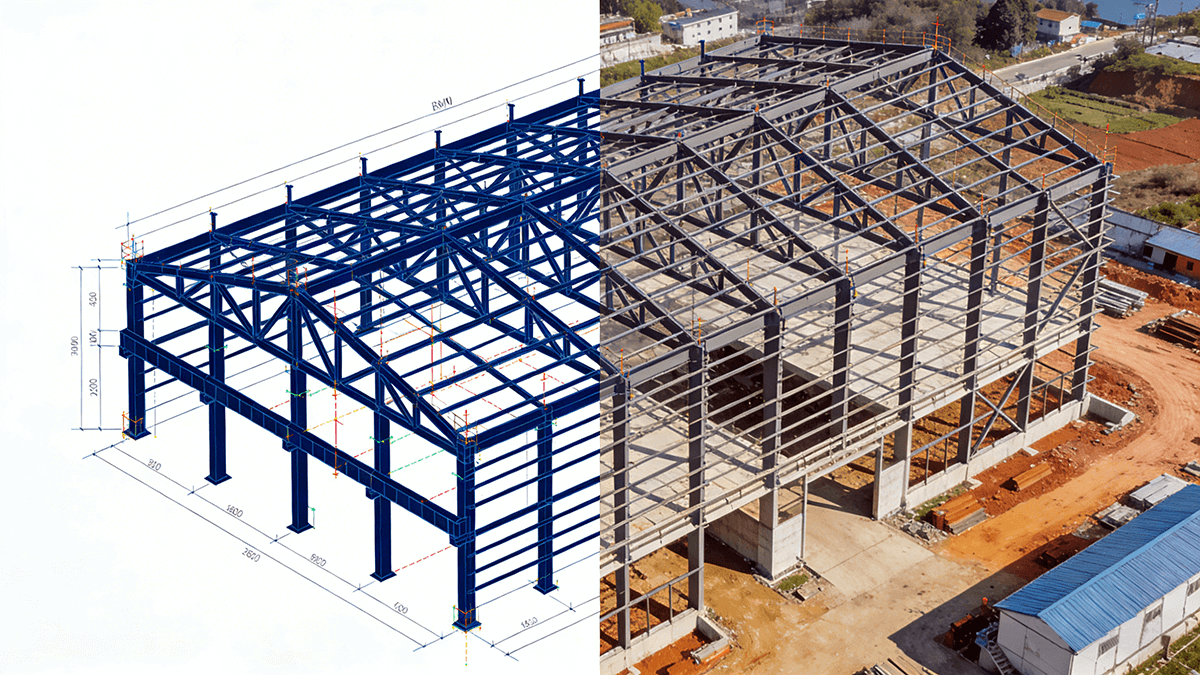
- BIM coordination support (Revit models shared weekly, clash-free with MEP and civil drawings).
- Local regulatory alignment—our in-house IQS-certified reviewer checks all submittals against latest amendments (e.g., IQS 2507:2024 Ed.3, effective Jan 2025).
- Installation supervision included—no extra charge—for first 15 days on site.
- Training for your foremen: 2-day hands-on session on bolt tensioning, panel alignment tolerances, and EV grounding verification.
Let’s Start Where You Are—Not Where Brochures Say You Should Be
If your site survey is still pending—or your budget hasn’t been finalized—or you’re just comparing three vendors’ PDFs—we’ll send a 3-page feasibility note within 5 working days. It’ll cover: exact steel tonnage required, foundation type recommendation (shallow raft vs. pile cap) based on your location’s IQS soil zone, and realistic erection timeline (including sandstorm buffer days). No commitment. No sales pitch. Just facts—built on what we’ve done in Iraq, not what we hope to do.