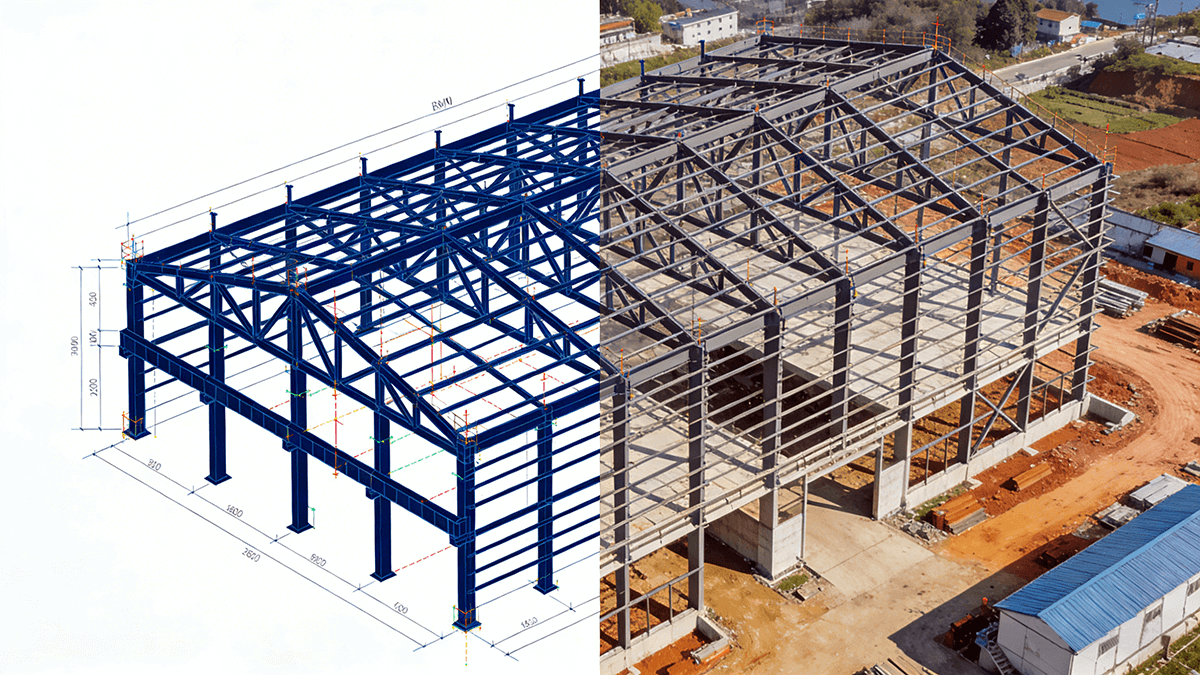
What if your sodium-ion and lithium-ion battery facility in Pakistan isn’t just built—but engineered to survive monsoons, tolerate 45°C summer peaks, stay powered during grid outages, and pass PSQCA inspection on the first submission? That’s how we start every battery factory project—not with a quote, but with a site-grounded engineering plan.
What keeps our clients awake at night—before they even sign a contract
We’ve heard it from over 12 similar projects across Southeast Asia and the Middle East: dual-chemistry production demands more than “two lines under one roof.” It means separating lithium-ion electrode coating zones (requiring Class 7 cleanrooms, dew point ≤ –20°C) from sodium-ion mixing & drying areas (less stringent, but needing dust explosion venting). It means designing structural bays that allow independent HVAC zoning, fire-rated corridor separation (2-hour rated walls), and dual utility risers—one for Li-ion’s ultra-low particulate air handling, another for Na-ion’s high-airflow exhaust. In Pakistan specifically, clients worry about voltage sags tripping coating ovens, sand infiltration clogging HEPA filters, and galvanized steel corroding faster than expected near coastal Karachi or industrial Lahore.
Factory-level inspection standards—not just paperwork
Our internal QA gate at the design stage isn’t ISO-compliant—it’s PSQCA + BNBC 2020 pre-audited. Every structural drawing carries stamped verification against Pakistan’s National Building Code clauses for seismic Zone 2B and wind speed 130 km/h. Before steel leaves our Hebei plant, each H-beam batch is tested for tensile strength (≥ 345 MPa), zinc coating mass (275–350 g/m² per ASTM A653), and bendability—no exceptions. We don’t wait for third-party reports; our lab issues traceable mill test reports (MTRs) with QR-coded batch IDs, linked to raw material invoices and galvanizing bath logs.
Technical countermeasures—field-proven, not theoretical
We don’t propose “climate-resilient solutions.” We deploy what’s already working:
- Thermal performance: 100 mm rock wool + PU hybrid sandwich panels (λ = 0.022 W/m·K), tested at 48°C surface temp in our Shijiazhuang climate chamber—maintains interior ΔT ≤ 8°C under peak load, verified by IR thermography on completed Pakistan cold storage projects in Faisalabad;
- Power resilience: Integrated busbar trunking with dual-infeed capability—grid + diesel gen—pre-wired at factory, including automatic transfer switch (ATS) mounting frames and UPS bypass conduits sized for 120% of critical load (per NEPA 1 Pakistan Chapter Annex C);
- Corrosion control: Hot-dip galvanizing + silicone-modified polyester topcoat (tested to 2,000 hrs salt spray, ASTM B117), used on all exposed purlins and eave gutters in our Karachi poultry complex—zero red rust observed after 3 years;
- Fire & explosion safety: Pre-engineered gas suppression nozzles (Novec 1230) embedded into roof panels above Li-ion cell assembly zones, coordinated with local fire brigade interface points during installation supervision.
Supply chain transparency—no black boxes
You’ll receive a material traceability dashboard before production starts: live view of coil lot numbers, galvanizing bath temperature logs, CNC cutting path files, and weld seam UT testing records. All steel comes from certified mills (Baosteel, Ansteel) with PSRA-accepted test certificates. Fasteners are grade 8.8, torque-calibrated on-site—and every bolt location is marked on our as-built BIM model, down to M12 vs. M16.
Abnormality management—how we catch issues before they ship
At our 48,000 m² facility, every panel batch undergoes three checkpoints: (1) raw material incoming inspection (thickness, coating adhesion, surface defects), (2) post-forming dimensional scan (±0.8 mm tolerance on flange width), and (3) final assembly dry-fit validation using laser tracker alignment—no field rework needed. If a panel fails UT testing, it’s quarantined, root-caused (typically weld speed or shielding gas flow), and reprocessed—not patched. Our PPM defect rate for insulated panels has held below 147 for 27 consecutive months.
Full-lifecycle planning—not just delivery
We advise clients to order in two tranches: (1) Phase 1 Core Structure (columns, rafters, bracing)—shipped 90 days pre-construction, allowing foundation curing while steel arrives; (2) Phase 2 Enclosure & MEP Interface Kits (panels, doors, electrical sleeves, firestop collars)—shipped 30 days before erection, aligned with local crane availability and monsoon window. This reduces on-site storage pressure and avoids tariff volatility on imported insulation cores—since PU foam is sourced locally in Lahore under our licensed formulation agreement.
Partnership support—not just warranty cards
We assign a Dedicated Project Engineer—not a sales rep—who speaks Urdu, holds PEC registration, and has supervised 4+ projects in Pakistan. They conduct weekly joint reviews with your site team, manage PSQCA documentation handover, and train your maintenance staff on panel seam resealing protocols and galvanized coating touch-up methods. Post-handover, we provide remote thermal imaging analysis of envelope performance every 6 months—free—for the first 2 years.
Who we are—and why this isn’t generic advice
I’ve led 37 prefabricated battery and energy storage facilities since 2009—from Vietnam’s first LiFePO₄ gigafactory to a solar-integrated sodium-ion pilot line in Abu Dhabi. At Weizhengheng, we don’t sell buildings. We deliver certified, inspected, and locally anchored infrastructure—with full-cycle EPC responsibility, BIM-coordinated installation, and real-time material accountability. Our 5,000 m²/day capacity means your Phase 1 structure ships in 18 working days after final design sign-off—not “as soon as possible.”
Next step—let’s build your plan, not your price list
If you’re ready to move beyond questions and into actionable engineering—share your preliminary site coordinates, utility connection point details, and target commissioning date. We’ll return a BIM-based layout proposal within 10 working days—including structural bay optimization for dual-line logistics, HVAC zoning maps, and PSQCA compliance gap analysis—all at zero cost.