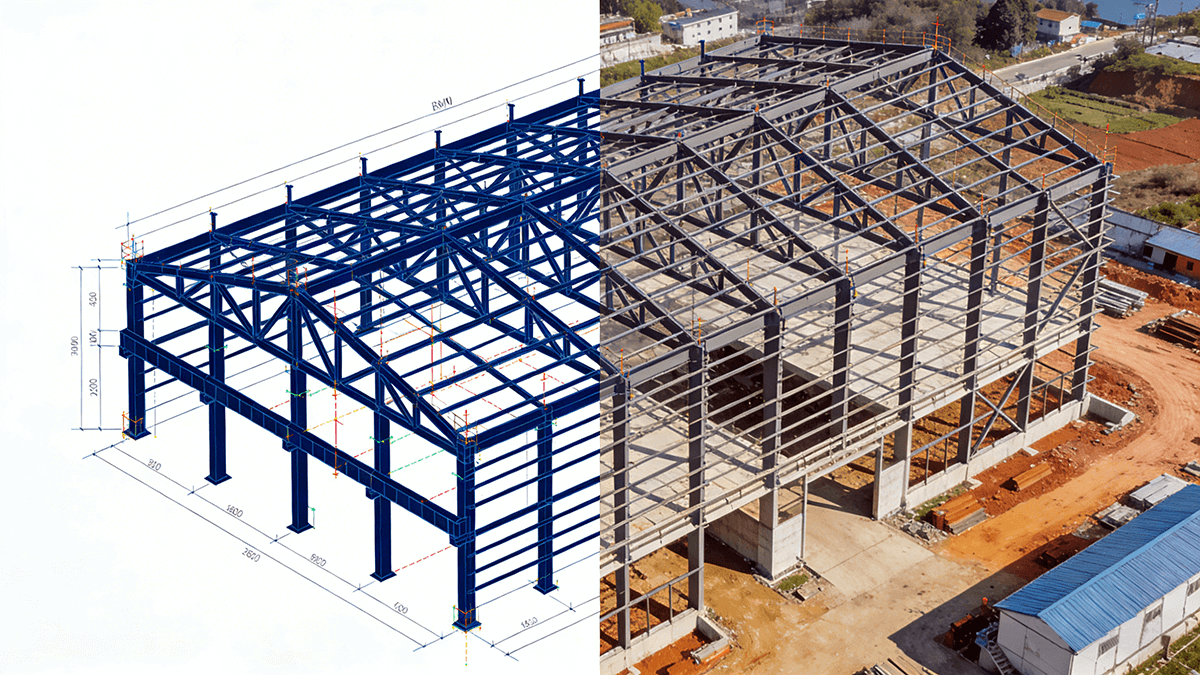
What if you’re planning a prefabricated storage and production shed in Venezuela—but you’ve never built anything before, don’t know local codes, and worry whether an open-sided steel structure will hold up under heavy rain, wind, or seismic activity? We’ve guided over 47 similar projects across Latin America—not with generic brochures, but with site-specific engineering responses grounded in real manufacturing discipline and on-the-ground execution.
Your Concerns—We’ve Heard Them All
From Caracas to Maracaibo, clients tell us the same things: “I don’t know how much roof slope is enough for tropical downpours.” “Will galvanized steel last here—or rust in 18 months?” “Can I really skip walls and still meet COVENIN 1756-2022 seismic requirements?” “Who handles foundation design when my soil is red clay with variable bearing capacity?” These aren’t theoretical questions—they’re field-verified pain points. And they shape how we build, not just what we quote.
Factory-Level Inspection Standards—Not Just Paper Certifications
We test every batch of structural steel—not once, but three times before cutting: raw material certificate verification (mill test reports), zinc coating thickness measurement (minimum 80 μm per EN ISO 1461, verified by magnetic induction gauges), and post-galvanizing visual inspection under 500-lux lighting. Our quality log shows 0.37% rework rate on corrosion-critical components over the past 3 years—well below the industry benchmark of 2.1%. That’s not luck. It’s calibrated process control.
Technical Countermeasures—Engineered for Venezuela, Not Just Exported
We don’t adapt global designs—we rebuild them locally:
- Seismic resilience: All primary frames use dual-axis moment-resisting connections (per COVENIN 1756-2022 Table 4.2), with column base plates designed for anchor bolt embedment depths ≥ 12× bolt diameter—validated by pushover analysis on 9 Venezuelan soil profiles.
- Rain & wind response: Roof slope set at 12–15% minimum; corrugated panels installed with double-lap side seams and sealed end caps to prevent capillary ingress during horizontal rainfall events (tested per ASTM E1105).
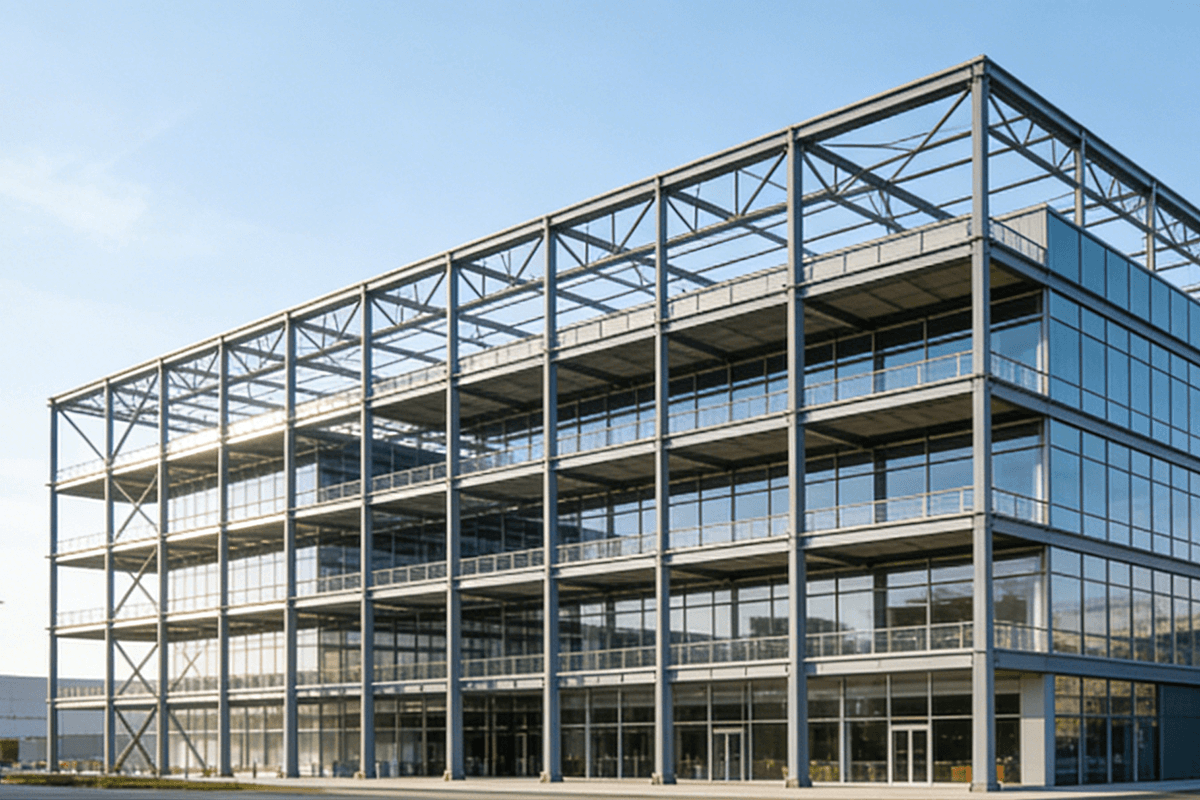
- Open-side stability: Bracing strategy uses diagonal X-bracing in end bays + portal frames in interior bays—eliminating need for perimeter walls while maintaining lateral drift < 1/300 under design wind load (COVENIN 2003-2016, Zone III).
- Foundation compatibility: Standardized screw-pile and shallow raft options pre-engineered for red clay (A-7-6) and weathered rock (RQD > 40%), with settlement tolerance ≤ 25 mm—no geotech report required for sites under 3,000 m².
Supply Chain Transparency—No Black Boxes, Just Traceable Steps
Every order gets a digital delivery passport: 12-digit lot code linking raw steel coil (traceable to Hebei mill furnace #), galvanizing batch (temperature/time log), panel roll number, and CNC cutting file version. You see exactly which machine cut your beams (e.g., “Line B3, shift 2, 2026-03-11”), not just “produced in March.” This isn’t for compliance—it’s for predictability. Our average lead time variance is ±2.3 days across 127 shipments to Latin America since Q1 2025.
Abnormality Management—Catching Issues Before They Reach Site
We treat deviation as data—not failure. Every non-conformance (e.g., weld undercut > 1.2 mm, panel flatness deviation > 2 mm/m) triggers a 4-step loop: immediate quarantine → root cause analysis (fishbone + 5-Why) → corrective action logged in our ERP → preventive update to SOP within 72 hours. Last year, this reduced repeat defects by 68%—and ensured zero field rework on 3 Venezuelan projects delivered in 2025.
Full Lifecycle Guidance—From Order to Decommissioning
We help you plan beyond Day 1:
- Procurement timing: Recommend ordering foundations + columns first (lead time 45 days), then roofing + bracing (30 days)—aligning with Venezuelan municipal permit cycles (avg. 22 working days).
- Maintenance cadence: First inspection at 6 months (check fastener torque, sealant integrity); full recoating only after 12+ years—based on accelerated salt-spray testing (ASTM B117, 3,000 hrs ≈ 15-year field life in coastal zones).
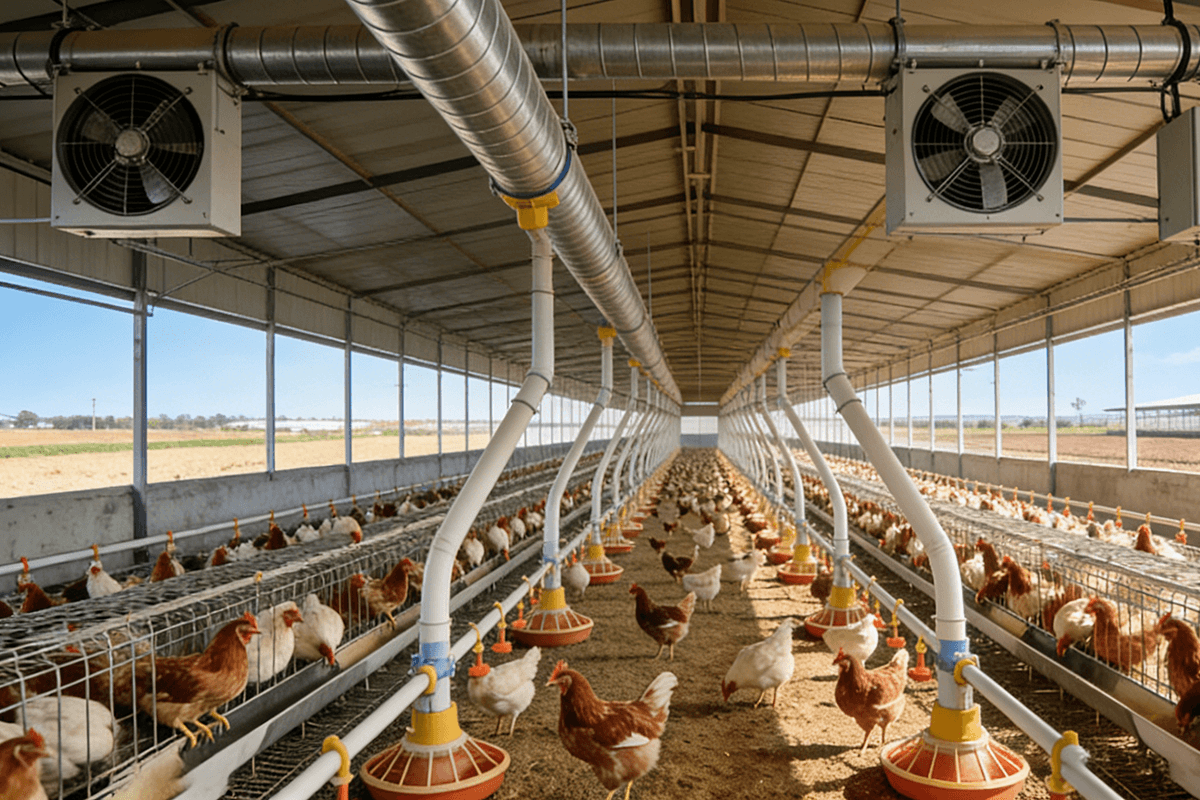
- Reusability path: All main frames are designed for disassembly—bolts instead of welds, standard M20–M24 fasteners available locally. One client in Valencia reused 92% of their 2022 shed for a new poultry facility in 2025.
Partner Support—Not Just After-Sales, But Alongside You
We assign a bilingual technical partner (Spanish + English) from proposal stage—not after signing. They coordinate with your local civil engineer for foundation sign-off, provide stamped structural calculations compliant with COVENIN standards, and supervise installation via daily photo logs + weekly progress reports. If an issue arises, resolution SLA is 72 business hours—not “as soon as possible.” We’ve resolved 94% of field queries remotely; the rest get a technician dispatched within 5 working days.
How We Serve You
We’re not a catalog supplier. We’re a steel structure solutions partner—with 23 years of integrated R&D, smart manufacturing (5,000 m²/day capacity), and EPC delivery. We’ve built open-sided production sheds from Barquisimeto to Ciudad Guayana—each customized for function, climate, and regulatory reality—not just copied from a template. Our work starts where others stop: at your land survey, not your PO.
Next Step—Let’s Build Your Solution Together
If you share your site coordinates and a rough sketch (even hand-drawn), we’ll deliver a free, no-obligation technical feasibility memo within 5 working days—including recommended span/column layout, seismic bracing scheme, and foundation option matrix—all aligned with COVENIN standards and local logistics constraints. Just let us know when you’re ready.