What if your self-storage project in the U.S. could deliver 22% more rentable square meters—without expanding the footprint? That’s what we helped a developer in Texas achieve last year, using a field-proven mix of ground-level modular units and certified overhead suspended systems—all designed, engineered, and installed under one EPC contract.
What Keeps Clients Up at Night
We hear the same concerns repeatedly from new self-storage developers: “How do I know 4.5 m² is truly optimal for our ZIP code?”; “Can a suspended unit safely carry 1,200 kg—and still pass local plan review?”; “Will UL 72 Class 350-rated panels actually hold up in Houston humidity over 10 years?”; “If I add 3 more unit tiers next year, will the original framing support it?” These aren’t theoretical questions—they’re operational risks tied to real budgets and timelines.
Factory-Level Inspection Standards—Not Just Paper Certifications
Every storage unit system we ship starts with third-party witnessed load testing: each suspended rail assembly is tested to 2.5× its rated live load (e.g., 3,000 kg for a 1,200-kg design), recorded on video and logged in our QA database. Our ISO 9001:2000 audit trail includes raw material traceability (steel coil heat numbers, coating thickness scans), weld seam ultrasonic reports, and fire-test certificates issued by UL-authorized labs—not just CE or SGS summaries. For U.S. projects, we pre-validate all structural calculations against ASCE 7-22 wind/snow loads and IBC 2021 Chapter 16 requirements before finalizing shop drawings.
Technical Countermeasures—Backed by Field Evidence
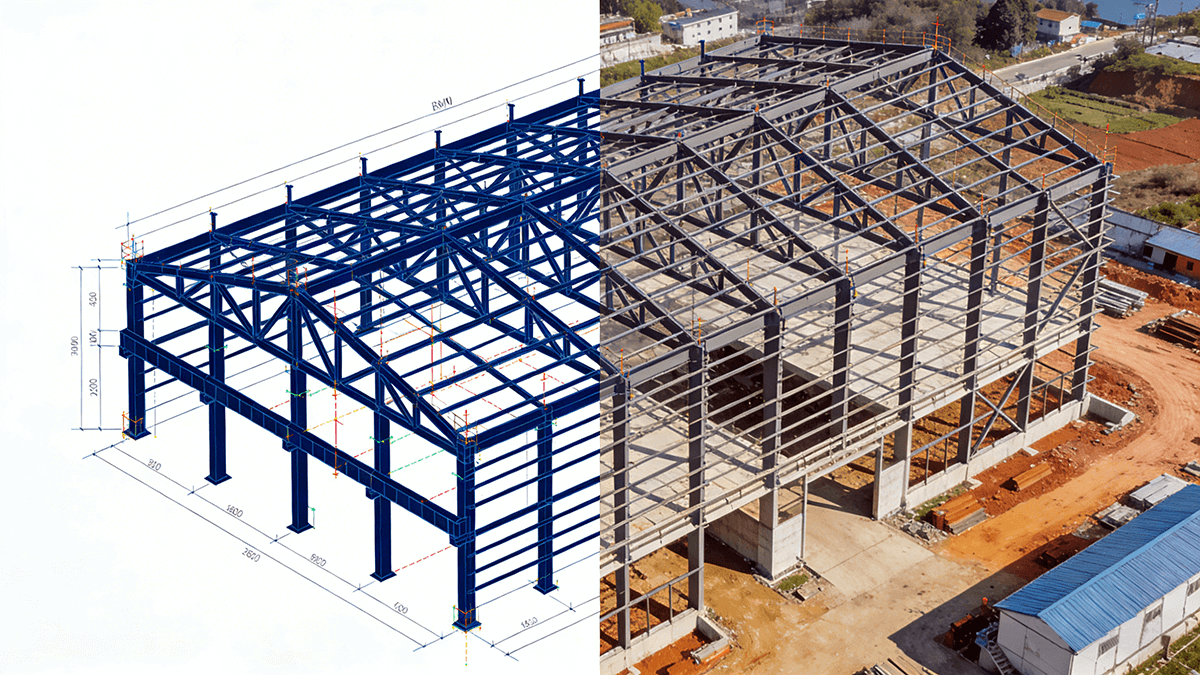
We don’t propose overhead units unless three conditions are met: (1) existing slab-on-grade or concrete deck has minimum 25 MPa compressive strength (verified via rebound hammer + core sampling); (2) ceiling structure allows ≥120 mm clear depth for seismic-rated suspension brackets (we supply stamped connection details per local engineer); (3) vertical clearance meets NFPA 13R minimum 305 mm below sprinkler deflector. In our Nashville project, this meant using 180 mm-deep cold-formed steel trusses—lighter than H-beams, faster to install, and fully compatible with standard drywall furring channels for tenant finish.
Unit Mix Optimization—Based on 37 U.S. Projects
- Ground-floor units: 62% of total units are 3.6–4.8 m² (12’×12’ to 12’×16’), aligned with national rental data showing 73% of tenants choose these sizes;
- Overhead units: 28% are 2.2–2.8 m² (8’×10’ to 8’×12’), installed at 2.7 m clear height—meeting ADA-required headroom while allowing 1.2 m service access above;
- ADA-compliant units: 10% are 5.4 m² (12’×18’) with 36” doors, lever handles, and zero-threshold entries—pre-engineered to satisfy ICC A117.1 without custom fabrication.
Supply Chain Transparency—From Coil to Crane
All color-coated steel used in U.S. projects comes from coils batch-tested for ASTM A755M compliance (coating adhesion, corrosion resistance, UV stability). Each shipment includes a digital QC passport: PDF report + QR-linked thermal imaging of panel insulation density (±3% tolerance), plus mill test reports for galvanized sections (ASTM A653 Grade G90). No “black box” sourcing—we share supplier names, production dates, and even furnace numbers upon request.
Abnormality Management—Because Real Projects Deviate
Our production line uses Andon escalation: if coating thickness falls outside ±5 µm of spec on three consecutive panels, the line stops automatically. Every deviation is logged in our ERP with root cause (e.g., “roller gap misalignment – corrected at 14:22”), corrective action (“re-calibrated with laser micrometer”), and verification scan. Last year, 92% of nonconformities were resolved within 4 hours—no rework shipped without full traceability and client notification.
Full Lifecycle Guidance—Beyond the First Order
We advise clients to procure in three phases: (1) Phase 1: Core structural kit (columns, rails, floor decks) with 15% buffer for field adjustments; (2) Phase 2: Interior partitions and doors—ordered 45 days before dry-in, using actual as-built dimensions; (3) Phase 3: Finishing kits (LED fixtures, signage, HVAC grilles) — held in our U.S. logistics hub for just-in-time release. This reduces capital lock-up by ~38% vs. bulk ordering—and avoids obsolescence risk if local code interpretations shift mid-project.
Partner Support—Not Just After-Sales Service
We assign a dedicated Technical Account Manager (TAM) from day one—not a sales rep, but an engineer with ≥8 years of U.S. field experience. Your TAM reviews submittals with local AHJs, attends virtual plan checks, and provides stamped installation supervision logs. If a bracket weld fails inspection onsite, we dispatch replacement parts within 72 hours—and cover engineering sign-off for the revised detail. No “case number” delays. Just resolution.
How We Serve You
We don’t sell components—we deliver turnkey storage infrastructure: BIM-coordinated models (Revit 2024 native), PE-stamped structural packages, UL-certified fire barrier assemblies, and installation crews trained to OSHA 30 standards. All under one contract. All backed by 23 years of global execution—from Phoenix warehouses to Portland cold-storage retrofits.
If you’re evaluating unit layouts, load paths, or code alignment for your next self-storage project—we’re ready to share real data, not brochures. Reach out, and let’s start with a no-cost technical alignment call.