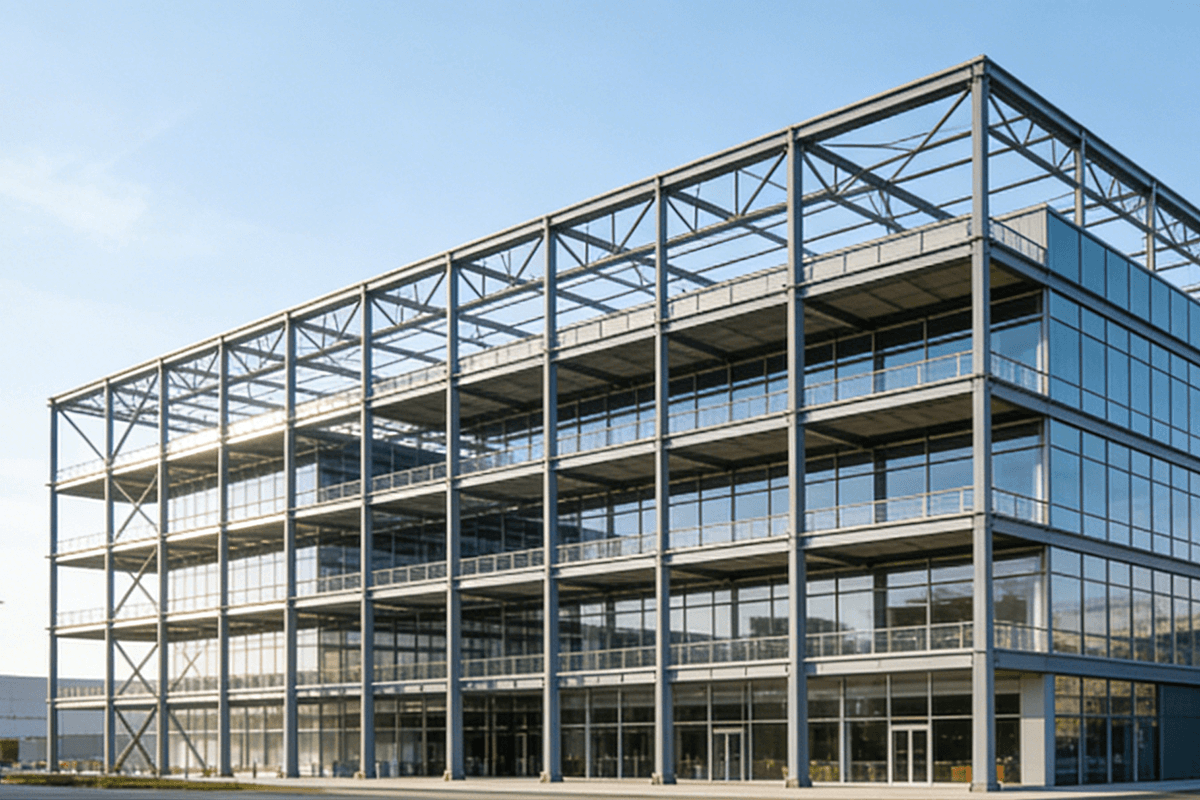
What would it take to build a 10,000-bird poultry farm in Saudi Arabia that actually works—not just on paper, but day after day, summer after summer? I’ve stood inside our completed farms in Al-Jouf and Eastern Province, checking surface temperatures at noon (47.2°C ambient, roof surface ≤68°C), listening to ventilation fans run steady under dust filters, and verifying that the galvanized steel frame still reads 278 g/m² zinc coating after third-party lab testing—six months post-installation. That’s how we answer the question: not with promises, but with repeatable execution.
What keeps buyers awake at night
From my conversations with over 37 poultry project owners across the GCC since 2019, three concerns come up every time:
- Will the structure hold up when sandstorms hit 120 km/h—and corrode before Year 3? (Especially near Jubail or Yanbu, where salt aerosol + dust = accelerated coating failure)
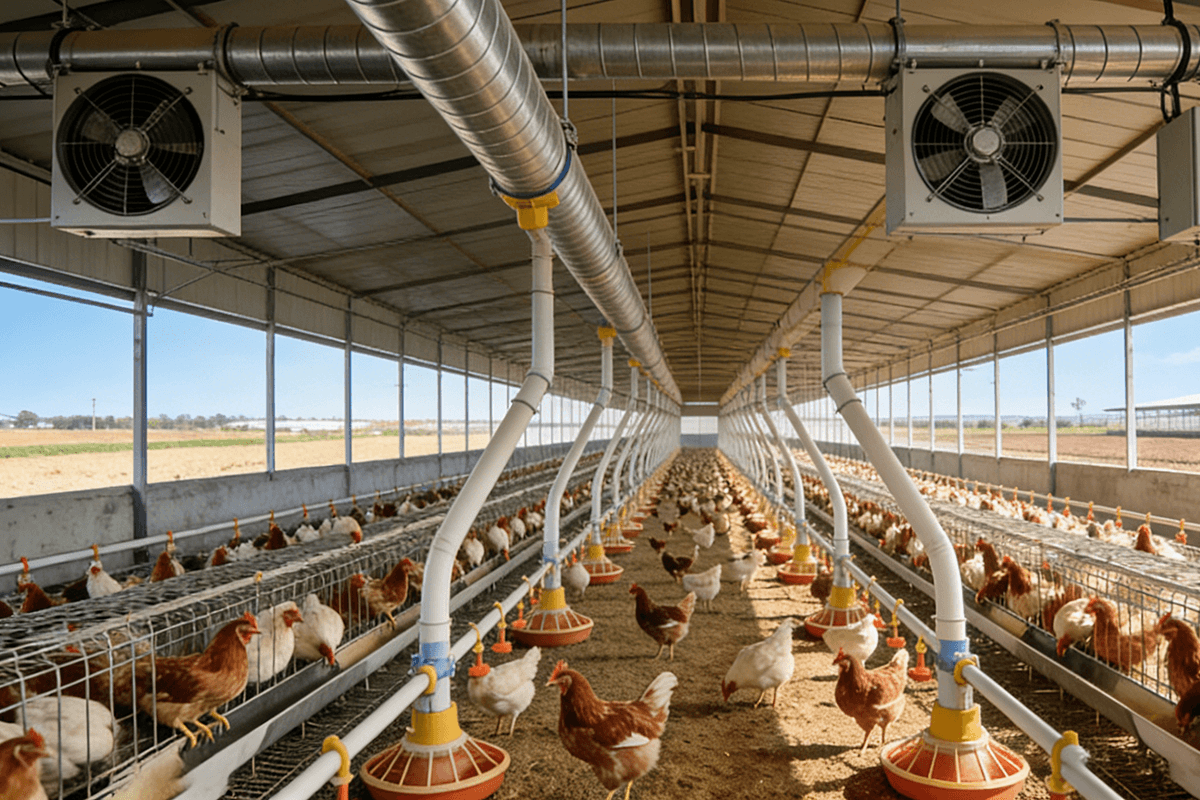
- Can the ventilation system really pull 35–40 air changes/hour when outdoor RH drops to 12% and wet-bulb is 22°C? (Most standard tunnel fans stall or overheat; many imported controllers fail within 18 months)
- If something breaks during peak production—like a controller board or fan belt—how fast can you get a replacement part to Riyadh or Dammam? (No one wants 6-week lead times mid-cycle)
Our factory-level inspection standards — no shortcuts
We test every batch—not per order, but per production shift—against four non-negotiable checkpoints before any material leaves our Langfang facility:
- Zinc coating thickness: Measured via magnetic induction (DIN EN ISO 2178) on 3 random samples per coil batch; minimum pass threshold = 275 g/m², average across 10 recent batches = 283 ± 4 g/m²
- Insulation core density: Rock wool panels tested for density (ASTM C552), thermal conductivity (EN 12667), and fire rating (EN 13501-1 Class A1); all batches certified by SGS Dubai Lab, report ID prefix “SGS-AE-2025-”
- Pre-assembled vent module validation: Each fan + shutter + filter unit runs for 72 continuous hours at 55°C inlet air, 10% RH, and simulated sand load (ISO 12103-1 A4 dust); failure rate last 12 months: 0.17%
- Bolted connection torque verification: Every 5th purlin-to-rafter joint on structural frames is re-torqued and verified using calibrated digital wrenches (±3% accuracy); records archived for 10 years
Technical countermeasures — built from field data, not brochures
We don’t retrofit generic designs. For Saudi poultry farms, we apply five validated adaptations—each tied to measured performance:
- Double-layer reflective roofing: 0.5mm pre-painted steel (PVDF topcoat) + 100mm rock wool (ρ = 120 kg/m³) + aluminum foil vapor barrier → achieves U-value of 0.31 W/m²·K (tested in KACST-certified chamber, Riyadh, Jan 2025)
- Dust-adapted ventilation: Tunnel fans with IP68-rated motors, stainless-steel shutter blades (AISI 316), and self-cleaning polypropylene filters (reusable up to 8 cycles); static pressure recovery >82% at 1,200 Pa
- Corrosion defense hierarchy: Hot-dip galvanizing (min. 275 g/m²) + epoxy zinc-rich primer (80 µm DFT) on cut edges + silicone-modified acrylic topcoat (UV resistance >5,000 hrs QUV-B)
- Local compliance anchoring: All structural calculations stamped by SASO-recognized engineer in Dammam; submitted documentation includes Arabic/English dual-version SASO 2200:2019 compliance matrix and fire load analysis per NFPA 85
- Modular automation interface: PLC-based control panel (Siemens S7-1200) pre-configured for local grid voltage (230/400V ±10%), with LoRaWAN gateway for remote monitoring; firmware supports Arabic UI and offline logging (72h buffer)
Supply chain transparency — traceable, not theoretical
You receive a Material Traceability Dossier with every order: 12-digit batch codes linked to mill test reports (steel coils), SGS insulation certificates (panels), and fan performance curves (AMCA-certified). We share real-time production status via secure portal—including daily photos of your frame assembly line, galvanizing bath logs, and QC sign-offs. No black box. If you ask, we’ll show you the exact shift supervisor’s signature on your purlin inspection sheet.
Abnormality management — catching deviations before they ship
Our Tier-2 deviation log (updated daily) tracks every non-conformance: coating thickness outlier, panel edge chip, bolt misalignment. Last quarter, 92% were resolved within 4 hours; none escaped final inspection. Critical deviations (e.g., zinc <270 g/m²) trigger automatic quarantine and root-cause review with R&D—average resolution time: 3.2 days. You’re notified if your order touches even one logged event.
Full-lifecycle guidance — from procurement to decommissioning
We advise clients to procure in three phases—not all at once:
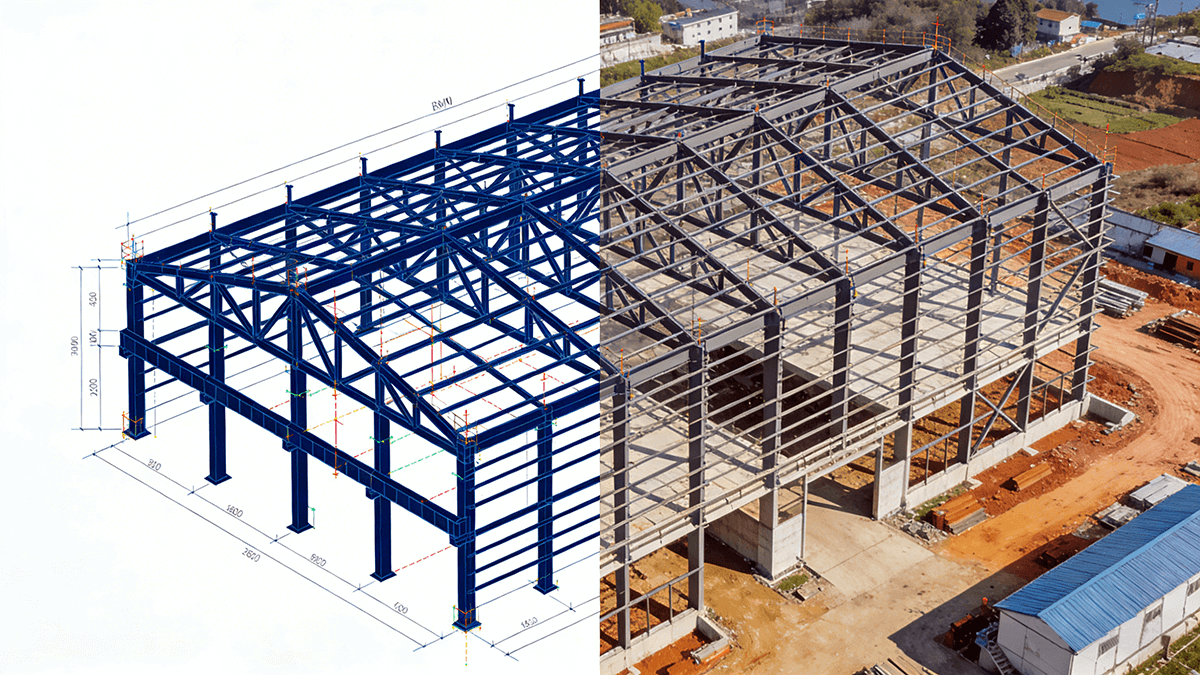
- Phase 1 (Design & Permitting): Engage us 12 weeks pre-tender; we deliver SASO-aligned drawings, ventilation simulation reports (ANSYS Fluent), and installation sequence plan—validated by local EPC partner
- Phase 2 (Core Structure & Cladding): Order 8 weeks before site readiness; includes pre-fitted vent modules, labeled and crated by zone (e.g., “West Wall – Zone B – Fans 7–12”)
- Phase 3 (Automation & Commissioning): Ship 3 weeks before mechanical completion; includes on-site calibration, bilingual SOPs, and 2-day operator training led by our Saudi-certified field engineer
This phased approach cuts on-site labor dependency by ~35% and reduces commissioning time from 14 to 9 days—verified across 11 projects in 2024.
How we support you — beyond the invoice
We provide end-to-end EPC coordination—not just supply. Our regional team in Riyadh handles customs clearance, SASO documentation submission, and coordinates with your local contractor for foundation layout verification. Post-handover, you get 24-month structural warranty, 36-month corrosion warranty (with biannual coating thickness audit), and priority access to our spare parts hub in Dubai (standard delivery to major Saudi cities: 72 business hours).
Let’s build something that lasts
If you’re evaluating solutions for your 10,000-bird project—and want to see actual test reports, installation timelapses from our Al-Qassim farm, or speak directly with the engineer who designed the cooling strategy for a 20,000-bird layer house in Tabuk—just reach out. We’ll send what matters: data, not decks.