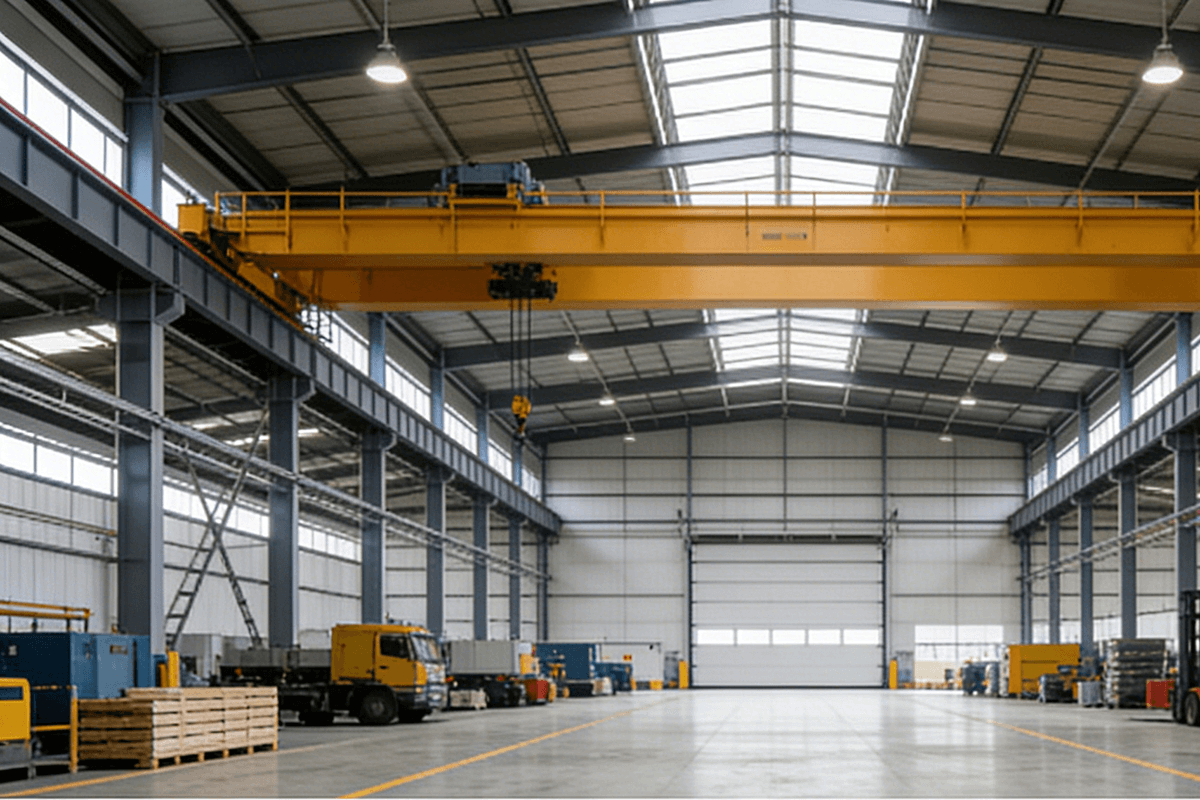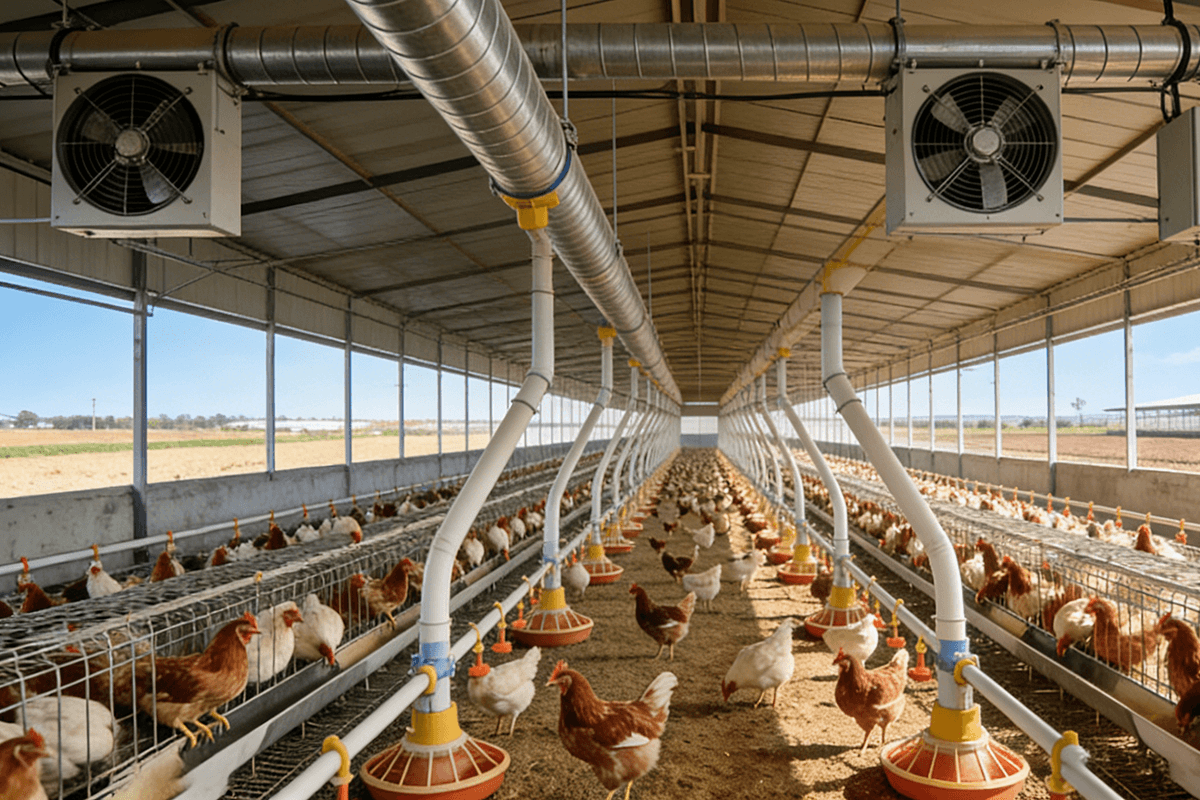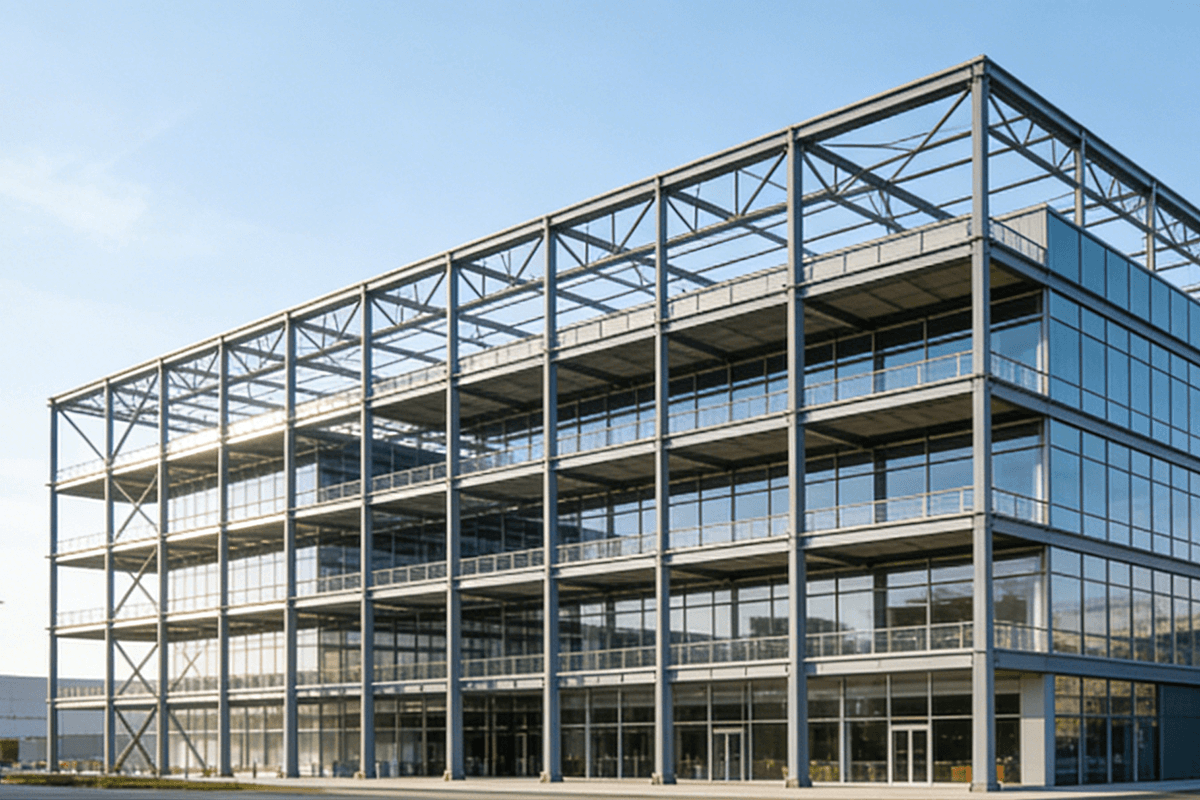
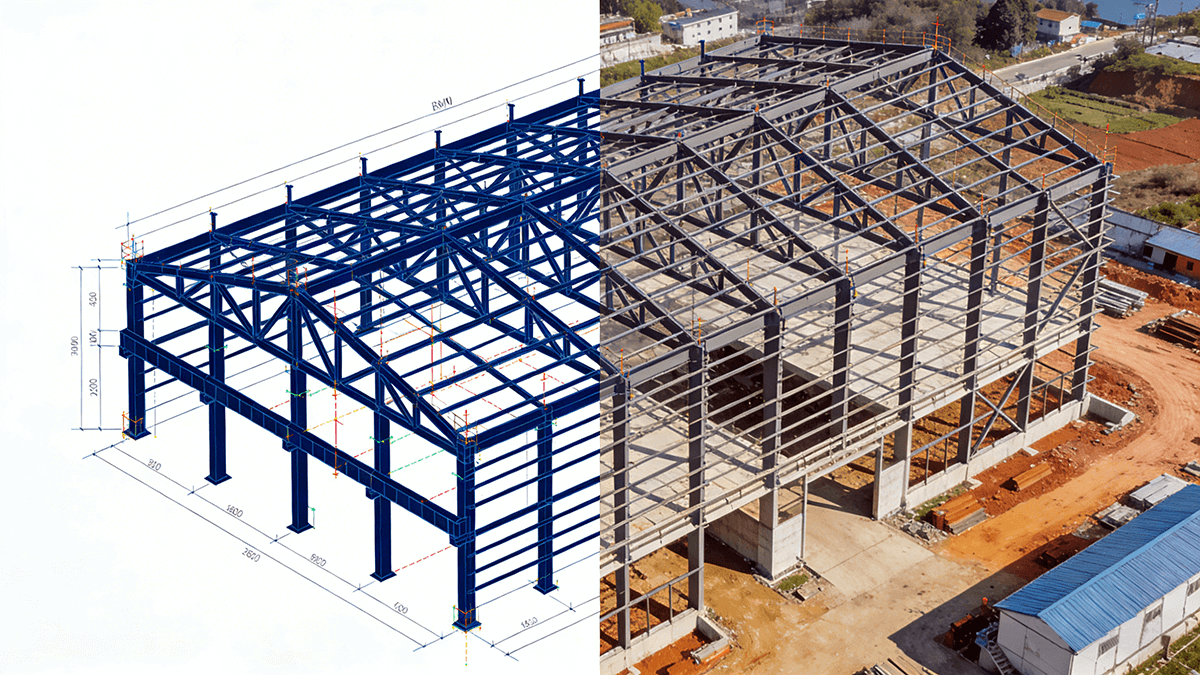
What would it take to build a 1,050 m² heavy-duty steel warehouse in Tanzania—without over-engineering, under-specifying, or getting stuck at customs? In 2023, we delivered exactly that for a poultry logistics hub near Dar es Salaam: same size, same climate zone, same regulatory context. Here’s how we did it—not as a sales pitch, but as a factory-floor walkthrough.
What keeps non-technical buyers awake at night?
We hear it often—and it’s always the same core concerns:
- Corrosion failure: Humidity + salt air + UV = rapid zinc depletion if galvanizing is below 275 g/m² (double-sided); we’ve seen panels fail in under 18 months with only 180 g/m² coating.
- Roof blow-off: Wind uplift pressure in coastal Tanzania can exceed 1.1 kN/m² during cyclonic season—yet many suppliers still use standard M10 bolts and 12° roof pitch.
- Drainage backup: Rainfall intensity hits 120 mm/hour in March–May; flat or shallow roofs without secondary overflow channels flood fast.
- Foundation mismatch: Clients pour concrete pads assuming “standard” column base plates—only to find bolt patterns don’t align with our hot-rolled H-beam anchors.
- Import delays: Missing TBS CoC, unlabelled Swahili markings, or uncertified galvanizing reports stall clearance for 3–6 weeks at Dar port.
Factory-level inspection standards — not just paper compliance
We test every coil, every beam, every panel—not once, but three times before dispatch:
- Zinc coating verification: Every H-beam and purlin undergoes magnetic induction measurement (per ISO 1461) at 5 points per meter; minimum pass threshold is 282 g/m² (7 g/m² above TBS requirement)—measured on-site, logged, and traceable by batch number.
- Cladding adhesion & UV resistance: PVDF-coated panels are tested for 5,000-hour QUV exposure (ASTM G154); color fade ΔE ≤ 1.2, chalk rating ≤ 1—verified by SGS Shenzhen lab report included with shipment.
- Wind-load anchoring validation: All base plates are pre-drilled and welded to ASTM A572 Gr.50 columns, then pull-tested to 1.8× design load (1.98 kN/m²) using hydraulic jacks—video recorded and archived.
Technical countermeasures — built into the system, not added later
No “custom engineering” surprises. Every solution is standardized, field-proven, and documented:
- Galvanizing: Dual-process hot-dip galvanizing (pre-fabrication + post-weld touch-up), certified to ISO 1461 & ASTM A123, with full thickness mapping report per bundle.
- Roof system: 15° pitch (not minimum 10°), double-layer drainage (primary gutters + overflow scuppers at eaves), and wind-resistant clip system (12 mm stainless steel clips spaced at 350 mm c/c—tested to 2.1 kN uplift).
- Transport & assembly: All structures split into ≤12.2 m modules (fits Tanzanian road limits); column bases pre-aligned to TZS 139:2021 anchor bolt templates; no field drilling required.
- TBS alignment: All structural drawings stamped by our in-house engineer registered with Tanzania Institute of Engineers (TIE); CoC issued via Bureau Veritas Dar office; bilingual labels (English + Swahili) applied pre-shipment.
Supply chain transparency — from coil mill to container seal
We publish real-time production milestones for every order:
- Raw material receipt date + mill test report (MTR) upload within 24 hours
- Galvanizing completion timestamp + coating thickness log
- Pre-shipment inspection (PSI) photo dossier: 32+ mandatory shots (weld quality, bolt torque marks, label placement, crate sealing)
- Container loading video (timestamped, geo-tagged, shared via secure link)
No “black box” manufacturing—we treat documentation as part of the product.
Abnormality management — because reality isn’t perfect
In 2025, 0.7% of our production batches triggered our internal “abnormal event protocol.” Example: one batch of rock wool sandwich panels showed thermal conductivity variance >5% vs. spec. Response:
- Immediate quarantine (no release without dual-lab retest)
- Root cause traced to raw wool moisture shift at supplier mill
- Corrective action: added inline moisture sensor + revised intake SOP
- Client notified within 4 hours—with replacement timeline, cost absorption, and third-party retest data
We don’t hide deviations. We track, resolve, and share them—because trust starts where things go wrong.
Full-lifecycle guidance — beyond the quote
We help clients plan smarter—not just buy faster:
- Phase 1 (Pre-order): Free site climate review (using NASA POWER 20-year rainfall/wind/UV dataset for exact coordinates)
- Phase 2 (Procurement): Recommend modular split based on local trucking capacity (e.g., 10.5 m max length for inland routes)
- Phase 3 (Installation): Provide certified Tanzanian erection supervisor (TIE-registered, Swahili fluent) or remote BIM-guided video support
- Phase 4 (Operation): 10-year corrosion performance warranty backed by annual thickness survey option (via local partner)
Our service — engineered into the process
We’re not a factory that ships boxes. We’re a technical partner who ships confidence:
- BIM-integrated design (Revit + Tekla models shared in native format)
- Structural calculations signed off per TZS 139:2021 & ASCE 7-22 (wind), with local load assumptions clearly annotated
- On-ground support: 3-day response window for technical queries; 14-day turnaround for drawing revisions
- After-sales: Digital twin handover package (3D model + maintenance log + spare parts list)
Let’s start with your site — not your budget
If you’re evaluating options for a 1,050 m² warehouse—or any industrial structure—in Tanzania, send us your GPS coordinates and soil report (if available). We’ll return a free, no-obligation technical alignment note: what works, what doesn’t, and why—based on what we’ve built, tested, and delivered there.